Can You Watch Interactive Dramas Offline? What to Expect Without a Connection
Interactive dramas are online-first by design, and the reasons are structural. Branches load as you choose them, the interactive layer runs live, and your progress follows your account, not your handset. That does not make the format hostile to commutes, flights, or dead zones; it means the realistic playbook is different from the one that works for downloaded video files. This guide answers the offline question plainly, explains why the format leans online by design, shows where the connection cost stays small, and gives four habits that keep spotty signal from eating your watching time. The boundary to hold throughout: DRAMAGO does not currently offer an offline viewing mode, so watching always means streaming, and the strategies below plan around dead zones rather than promising anything through them.
Why interactive dramas lean online
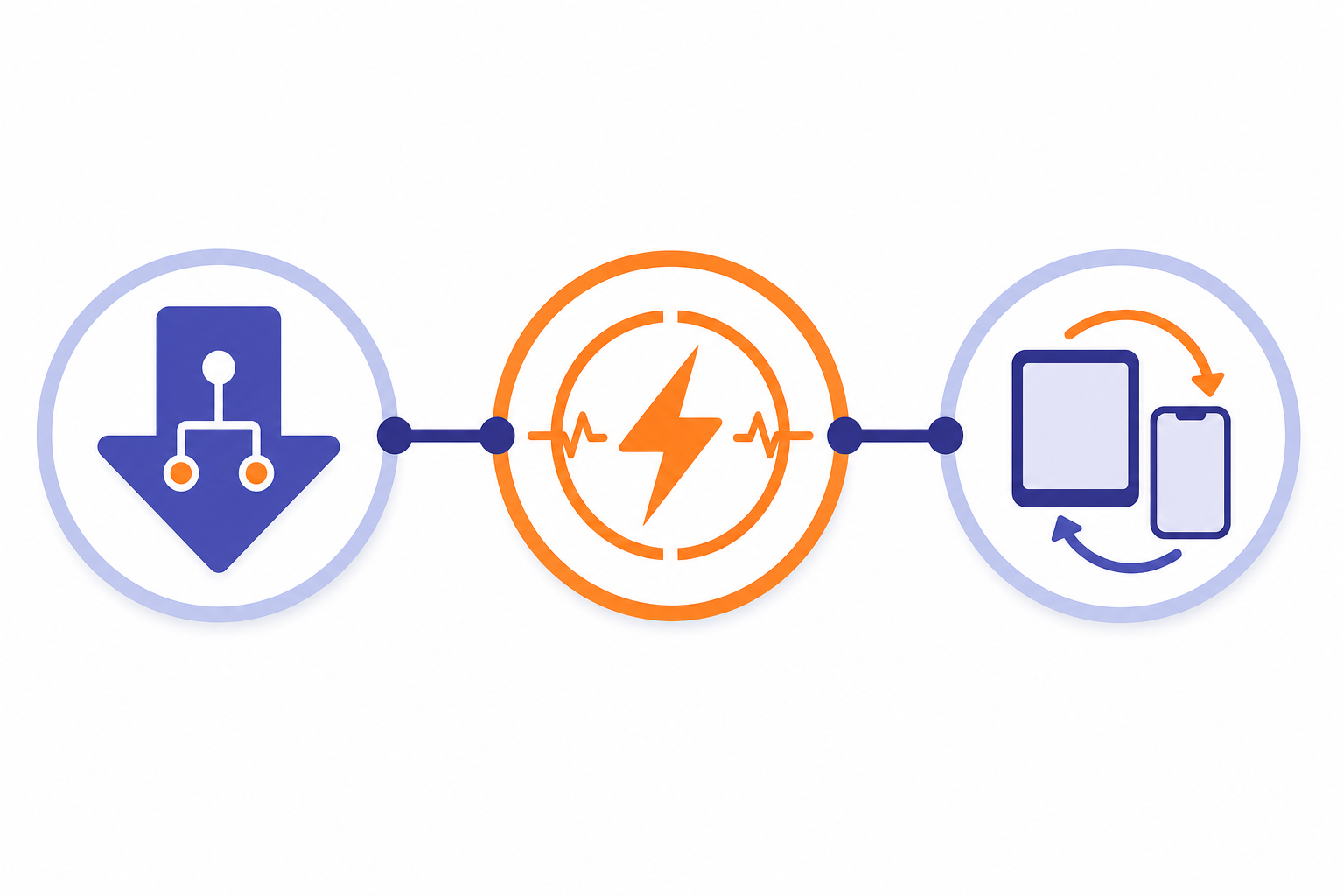
Three structural reasons tie interactive dramas to a connection: branch content loads on demand, the interactive layer runs live logic, and progress syncs across runs and devices. None of them is a defect; together they are the shape of the format.
Branch loading is the first reason, and scale makes it obvious. DRAMAGO's flagship detective series runs an investigation at fourteen branch lines over eighty seven episodes, which means the full story tree is several times larger than any single path through it. Pre installing every route would mean downloading whole storylines a given player will never open. Loading each branch as it is chosen keeps the download honest and the experience current, at the cost of needing the network at the fork.
Live logic is the second. Timed prompts, the act inside the window or the moment passes mechanic, and explorable scenes that answer where you look all need the engine responding in real time. That responsiveness is the difference between playing a beat and reading about it, and it depends on the session being live.
Sync is the third. A format built for second and third playthroughs keeps route history, endings collected, and progress attached to the account, so a run started on one device can finish on another, and a dead battery or a new handset costs nothing but a reconnect. Accounts and networks go together by construction.
The contrast with linear short drama clarifies the point. A linear series is one sequence of files played in order, structurally close to a cacheable form; an interactive one is a decision tree with a video engine walking it. Different shapes, different network profiles, and neither is the wrong one.
The connection cost, at least, stays small. Episodes run one to three minutes, so the per episode footprint sits far below long form streaming, a commute sized session costs proportionally less, and a dropped connection costs one fragment rather than half a film. Branch on demand loading moves only what you actually watch rather than the whole tree, so the bytes follow the choices. The format is built for fragments, and fragments travel light.
Practical strategies for spotty connections
Four habits cover the three situations that matter, the subway stretch, the flight, and the monthly data ceiling: do the day's watching where the signal is, keep linear titles for the spotty stretches, move planning and recap tasks into the tunnel, and decide tomorrow's route today.
Watch where the Wi-Fi is. With no offline mode to fall back on, the honest form of this habit is scheduling: finish the branch you are on before you leave, and let the underground stretch belong to planning rather than playback. The habit costs nothing and removes the tunnel letdown instead of leaving it to chance.
Keep linear content for the spotty stretches. Linear AI live action series, played start to finish in sequence, tolerate network fluctuation better than high branch interactive titles whose next scene depends on a live choice. Save the timed prompt heavy flagships for stable signal, and let the linear catalog carry the commute.
Move the no-stream tasks into the tunnel. Choosing the next series, planning which route to take on the next run, and replaying the story so far in your head or in notes require no video to move. Weak signal time is planning time, and the format's multi run design makes planning a real activity.
Decide today for tomorrow. Before a flight or a long offline stretch, settle what the day's session will be and how far it should go. The decision is genuinely better made in advance, with full signal and full library access, than at thirty thousand feet with neither.
With names, the habit assembles itself into a queue. The weak-signal lane belongs to the linear shelf: A Crown of Venom, three seasons and 62 episodes of straight-through story, plus My Mind, His Playground at 40 episodes, both of them sequence players rather than branch walkers. The best-signal evenings belong to the S-tier pair: Blood on the Badge, whose timed prompts and explorable scenes lean on the live engine across 87 episodes and 14 branches, and Sterling Lies, which asks for the connection at every fork of its three storylines and 74 episodes. Between the two sit compact A-tier runs such as Forbidden Rules to Tie a Princess at 30 episodes, sized for the pockets of signal a commute actually delivers. Nothing in this queue is an offline promise; it is matching title shape to network shape, which is the whole strategy in one line.
The free opening stretch of any title is the right laboratory for all of this: it costs nothing to learn how the app behaves on your route before any payment enters the picture, and the same stretch doubles as the place to judge which titles deserve your best signal evenings. The public entry point for browsing titles is www.dramagostudio.com, and the drama library lists each title with its introduction.
Frequently asked questions
Can I download DRAMAGO episodes to watch offline?
No. DRAMAGO does not currently support offline viewing, and there is no download mode to enable. Watching means streaming, so the practical answer is planning around dead zones, the four habits above, rather than hoping playback survives them. If offline support ever ships, the App Store and Google Play listings are where it will appear first.
Do interactive dramas use a lot of mobile data?
Less than the runtime suggests. Episodes run one to three minutes, so the per episode footprint stays far below long form video, and a commute sized session costs proportionally less. Heavy branch replay multiplies total watching time, not per episode size.
What actually works in a tunnel or on a plane?
With no offline mode, video needs the connection, and a stream that has never started will not start from nothing. Planning, route selection, and library browsing are the reliable activities once signal is gone.
Should I save interactive titles for stable connections?
As a rule of thumb, yes. Linear series tolerate fluctuation better because they play in sequence, while interactive titles ask the network for the next branch at every fork. The strongest signal spots deserve the most interactive titles.