Do Interactive Drama Apps Have Good Portuguese Subtitles? What PT Speakers Should Know
The question has two layers, and both deserve straight answers. Is Portuguese there at all, and, where the app is interactive, does the localization survive contact with the parts that make it a game? Subtitles are the visible surface, but choice buttons, timed prompts, and interface text are where a Portuguese speaker either gets the full experience or a subtitled shell around an English one. Coverage across interactive story apps is genuinely uneven, the apps courting Brazil are the ones localizing every layer, and you can verify any app's real quality for free before paying anything. DRAMAGO, for its part, lists Portuguese among seven supported languages and treats Brazil as a secondary focus market after North America, which is a positioning fact worth knowing as you read.
Portuguese in short drama apps: the current landscape
Coverage across the category runs from full-chain localization to a translated afterthought, and the dividing line follows market ambition: apps that treat Brazil as a growth market localize the product, not just the video.
The commercial pull is not subtle. Industry trackers counted close to one hundred million short drama downloads in Latin America in the first quarter of 2025, a sixty-nine percent jump over the previous quarter, and Brazil sits at the Portuguese-speaking center of that curve. Where downloads grow that fast, localization budgets follow, and Portuguese has moved from optional to expected in store listings across the category.
Positioning varies more than coverage. Some apps carry Portuguese subtitles as a settings option and leave it there. Others build for the audience: DRAMAGO's public materials describe a North America first strategy with Brazil as the secondary push market, and its App Store listing names Portuguese among seven supported languages. Positioning is not a quality guarantee, but it tells you who the app thinks it is building for.
The part most comparisons miss is that interactive drama localizes in more places than the dialogue track. Choice buttons carry the actual decisions, timed prompts carry the pressure, interface labels carry navigation, and episode titles carry the promise of the next installment. A title with Portuguese subtitles but English choice buttons has localized the viewing and left the playing in the original language. Complete localization covers every layer the reader touches, and that is the standard worth judging against.
What "good subtitles" means for interactive content
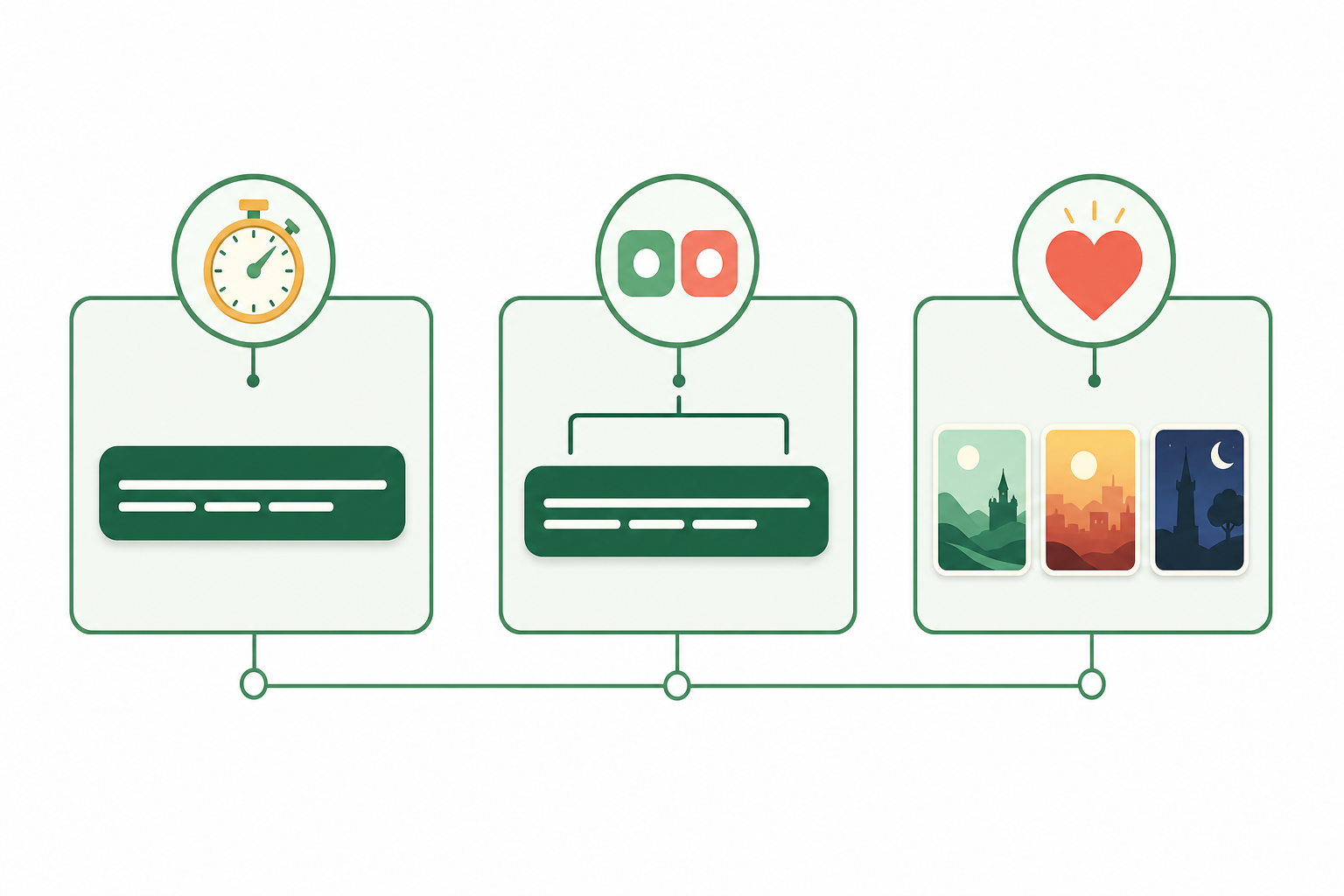
Three standards separate real localization from placeholder text: timing against fast dialogue, completeness across the interactive interface, and cultural fit with the stories Brazilian viewers actually binge.
Timing is the first test because the format makes it brutal. Vertical drama episodes run one to three minutes, dialogue lands in compressed exchanges, and a subtitle line that arrives late or lingers too long breaks the rhythm of a scene cut to the second. Good subtitling here means the text appears and clears with the delivery, and key words survive the cut into the next shot. It is a craft standard, and you can hear it in the first episode you watch.
Completeness is the dividing line specific to interactive content. If the choice buttons are in Portuguese, the timed prompts are in Portuguese, and the interface switches cleanly, the app localized the whole experience. If the video carries subtitles while the decisions stay in English, the player is switching languages mid beat, and the immersion cost is real. There is no partial credit on this one: the interactive layer is where the format lives, so it is where localization counts most.
Cultural fit is the quieter standard, and it is about selection rather than translation. Brazilian audiences in this genre lean toward high emotional intensity, family sagas, and billionaire romance, the kind of fare where betrayal and reconciliation arrive on schedule. An app can localize every word and still feel foreign if its catalog ignores what the audience actually binge watches. The strongest Portuguese experiences treat localization as curation: right language, right stories.
Whichever way you browse the app, the clearest way to choose is by the appetite each title serves. Grouped that way, four entry points cover most viewers:
- Billionaire romance. I Stole My Sister's Billionaire Alpha, 50 episodes of exactly that arc.
- Romance that rewards a rewatch. The Queen's Taming Rules, 40 episodes and two endings, so the second watch tells a different story.
- Slow-burn betrayal. Sterling Lies, three storylines spread across 74 episodes.
- Body-positive romance. Taste of Plus Love, one 40-episode run.
Whatever the appetite, the same check closes it: play one episode with a choice point in it, and the Portuguese question answers itself for the title you actually picked.
One honest note belongs in the body rather than a footnote. Subtitle quality is among the most frequent concerns users raise about short drama apps as a category, which is exactly why the checking method below matters more than any promise. Quality varies app to app and title to title, and the workable response is verification, not trust.
How to check before you commit
Three checks settle the question for any app: read the store listing's language list, open the language settings and look for the switch itself, and watch the free opening episodes with your own eyes before paying anything.
Start at the store page. Both the App Store and Google Play list the languages an app supports in their information sections, and that listing is a public commitment rather than marketing copy. If Portuguese is named there, the app has shipped it; if it is not, no amount of settings hunting will find it.
Then check the switch. Somewhere in settings, a localized app offers a language menu, and what matters is whether Portuguese appears and which variant it names, because Brazilian and European Portuguese are different experiences for a Brazilian viewer. The public entry point for browsing what the platform offers is www.dramagostudio.com, and the app's own settings are the authoritative place to confirm the menu.
Finally, watch before you pay. The free opening stretch of any title is where subtitle timing, interface completeness, and story fit become visible on real episodes rather than trailers. In DRAMAGO's case the free stretch runs until each title's first payment node, which is enough runway to judge Portuguese quality on the episodes you would actually watch, and the drama library publicly lists each title with its introduction so you can start from a genre you already like. Verify first, commit second: the one rule that works in every language.
Frequently asked questions
Does DRAMAGO offer Portuguese subtitles?
Yes. Portuguese is among the seven languages named in the App Store listing, and Brazil is positioned as the platform's secondary focus market after North America. As with any app, the free opening episodes are the place to confirm quality on the title you plan to watch.
Does the app use Brazilian or European Portuguese?
Store listings do not split variants, so the authoritative check is the language menu inside the app and the subtitles in the free stretch of a title you care about. Watch one episode with a choice point in it and you will know which variant, and how well it reads.
Are the choice buttons localized, or just the video?
That is exactly the completeness standard from this guide, and it varies across the category. Open the free stretch of any interactive title, reach a choice point, and read the buttons: what you see there is the honest answer for that app.
Which interactive drama app is best for Portuguese speakers?
No single verdict holds for every viewer, because coverage and quality shift title by title. The workable method is the three step check in this guide, applied to any app you are considering, with market positioning as the tiebreaker signal: platforms building for Brazil have the strongest incentive to keep their Portuguese good.