What Is a Vertical Drama? Anatomy of the Smartphone-Native Show
What is a vertical drama?
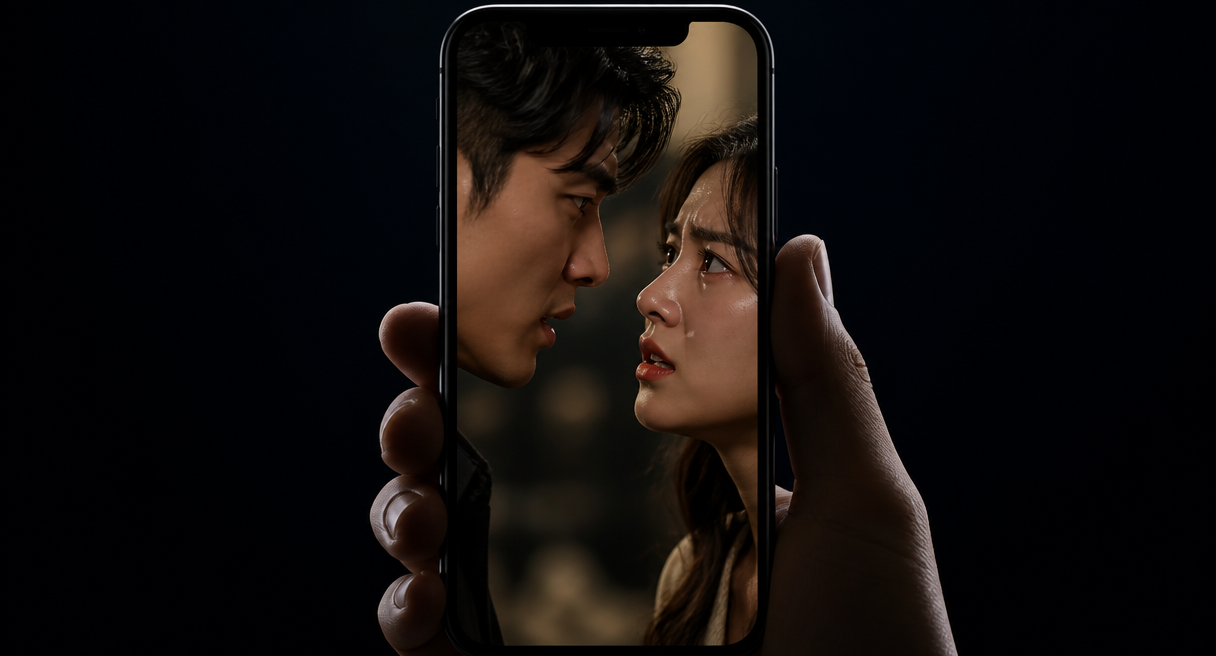
A vertical drama is a single scripted show built for the phone: 9:16 portrait footage, episodes of one to three minutes, and storytelling that keeps conflict and reversal close together. Four elements define the format, portrait framing, short episodes, emotionally concentrated storytelling, and mobile consumption, and each one is load-bearing.
Have you ever finished a whole episode of a show in the time it took the train to reach the next stop? That window is the design target of a vertical drama, a scripted show shot upright in the 9:16 frame for phones, its episodes one to three minutes long and its storytelling fast and emotionally concentrated. The noun matters here. This page follows one show, a single vertical drama, through its frame, pacing, genre, and endings.
Four elements appear in practically every vertical drama. The footage is portrait, filling an upright phone screen edge to edge. Episodes are short, usually one to three minutes. The storytelling runs hot, with conflict and reversal arriving early and often. And consumption is mobile, squeezed into commutes, queues, and breaks. Remove any one of the four and the format stops being what it is.
The short version: A vertical drama is one scripted show engineered for the upright screen, with minutes-long episodes and stakes that surface inside the first beats.
The anatomy: format, pacing, and story beats
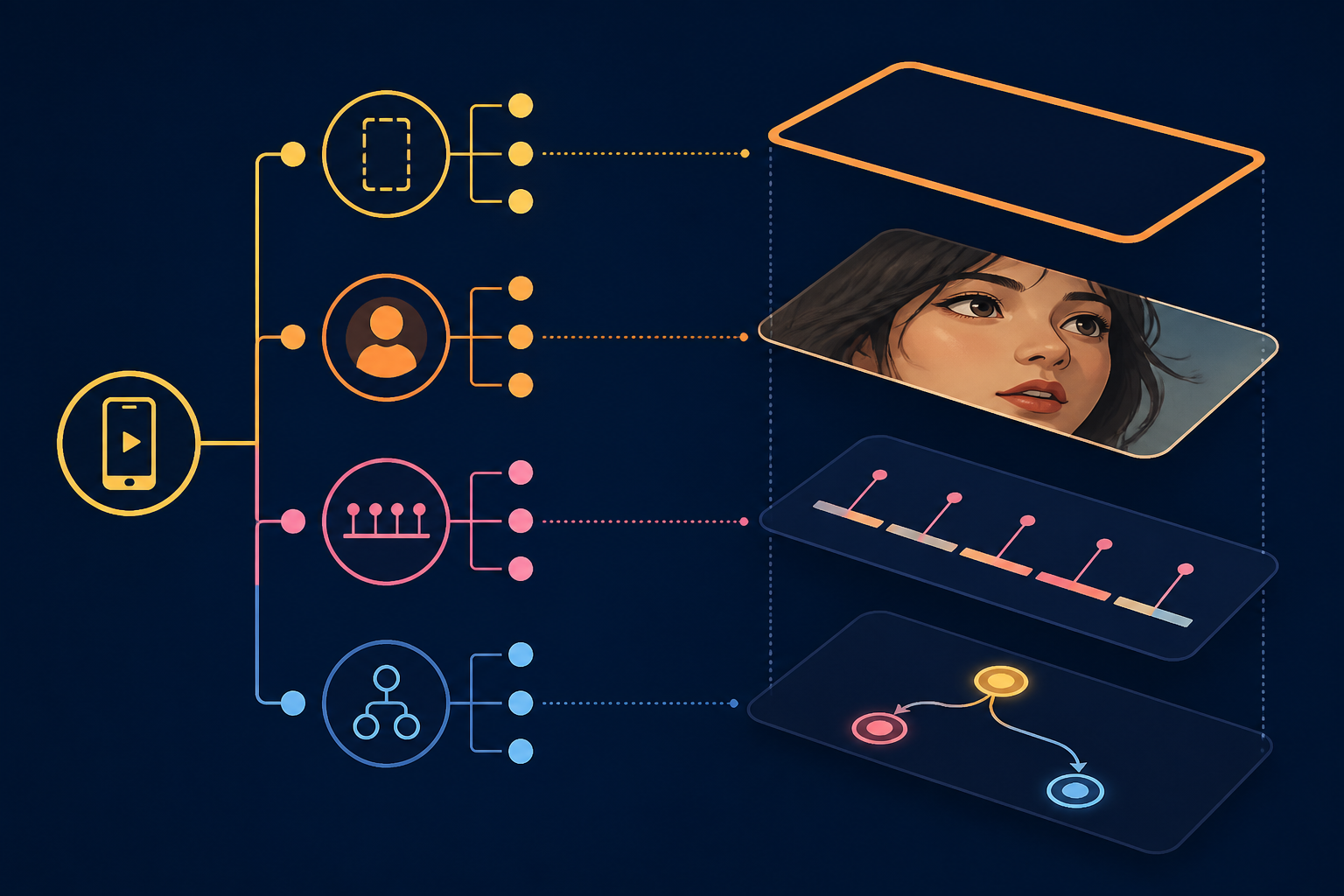
The anatomy of a vertical drama has three visible layers: close-up-driven lens language, a hook at the end of every episode, and genres that run toward strong emotional stakes. A fourth layer, interactivity, is present in some titles and absent in others.
The first layer is the frame and what directors do with it. A 9:16 canvas is tall and narrow, so the grammar of a vertical drama is built on close-ups and medium shots, faces held large enough to read on a small screen. Establishing shots appear briefly if at all, and the camera stays close because distance destroys legibility on a phone.
The second layer is pacing. A vertical drama spends its one to three minutes per episode the way a sprinter spends a race. Setup is compressed, conflict arrives within the first beats, and the episode closes on a hook, a revelation, a betrayal, or a choice strong enough to pull the viewer into the next installment. In short-form drama the emotional beats per minute run higher than in long-form television.
The third layer is genre. The genres in a vertical drama library lean toward high-stakes feeling: fantasy romance with werewolf and vampire leads, heroine-led comeback stories, suspense and crime, and the push-pull of sweet-torment romance. On DRAMAGO — an AI-native cinematic entertainment platform whose catalog includes linear and interactive vertical dramas — those four directions cover most of the catalog, and browsing the Blood on the Badge detail page shows the pattern in a single title, a detective thriller where the stakes are exposed within the first episodes.
The fourth layer, interaction, is optional. One vertical drama can be linear, watched start to finish with no input, which is the shape of DRAMAGO's two non-interactive AI live-action titles. Another can be interactive, like Blood on the Badge with its 14 branches, timed prompts, and panoramic scenes to explore. In the vertical drama format the portrait touchscreen makes interaction feel native, and the amount of it varies from title to title.
The key distinction: Every layer of a vertical drama, frame, pacing, genre, and optional interaction, is tuned for a phone held in one hand.
What makes a vertical drama different from a regular show
A vertical drama differs from a regular show on three axes: production is measured in days and weeks, viewing happens in the gaps of a day, and participation is sometimes handed to the viewer. On internal estimates, an A-tier title completes production in roughly 10 to 15 days and an S-tier interactive title in about 30.
Production is the first difference. On internal estimates from DRAMAGO (www.dramagostudio.com), an A-tier short drama completes its production cycle in roughly 10 to 15 days, and an S-tier interactive title in about 30. Traditional television drama works on cycles of months to years per season. The lighter apparatus, small crews, fast shoots, and post-production built around vertical framing, is what makes that speed possible.
Viewing is the second difference. Episodes of two to three minutes slot into gaps in a day, and a vertical drama series is designed to survive interruption, each episode a self-contained beat that also advances the arc. A regular show asks for a scheduled block of time and rewards it with depth; the two increasingly share a viewer and keep separate viewing situations. On DRAMAGO the opening episodes of any title play free, and the rest unlocks with in-app credits, which suits viewing in fragments.
Participation is the third. A regular show is watched. A vertical drama can be played, with choice nodes, timed decisions, and multiple endings on the interactive end of the spectrum. The difference is structural, and it changes what a second viewing means; a new set of choices can produce a new ending.
Who it's for: A vertical drama fits viewers whose watching time arrives in fragments and who want emotional stakes inside the first minute.
See one for yourself
Sterling Lies carries the interactive end of the format, I Stole My Sister's Billionaire Alpha the fantasy romance shelf, and Blood on the Badge the suspense shelf, all on DRAMAGO, where the opening episodes of every title play free across the app.
For a first vertical drama, the choice comes down to taste. Readers who want the interactive end of the format can start with Sterling Lies in the DRAMAGO library, an S-tier interactive series of 74 episodes launched in April 2026, where the story splits into three branch lines, Sander, Julian, and Leo, each with its own ending. Fantasy romance readers can look for I Stole My Sister's Billionaire Alpha, and suspense readers can start with Blood on the Badge and its 14 branches. The DRAMAGO app is on the App Store and Google Play; the official website at www.dramagostudio.com is the central source for titles, FAQs, and download links.
Frequently asked questions
What does vertical mean in vertical drama?
It means the show is shot and framed in 9:16 portrait video, the shape of a phone screen held upright.
How long is an episode of a vertical drama?
Most episodes run one to three minutes, with two to three minutes typical for short-form drama titles on DRAMAGO.
Are all vertical dramas interactive?
No. Linear titles — including DRAMAGO's four non-interactive AI live-action titles — run without viewer input, while interactive titles add story choices, timed prompts, multiple endings, and, on the deepest S-tier series, panoramic scenes and quick-time events.
What genres do vertical dramas cover?
The main genres are fantasy romance with supernatural leads, heroine-led comeback stories, suspense and crime, and sweet-torment romance.
How long does a vertical drama take to make?
On internal estimates, an A-tier title takes roughly 10 to 15 days and an S-tier interactive title about 30 days, far faster than a traditional television season.