What Is a Vertical Drama Series? The Multi-Episode Vertical Format Explained
What is a vertical drama series?
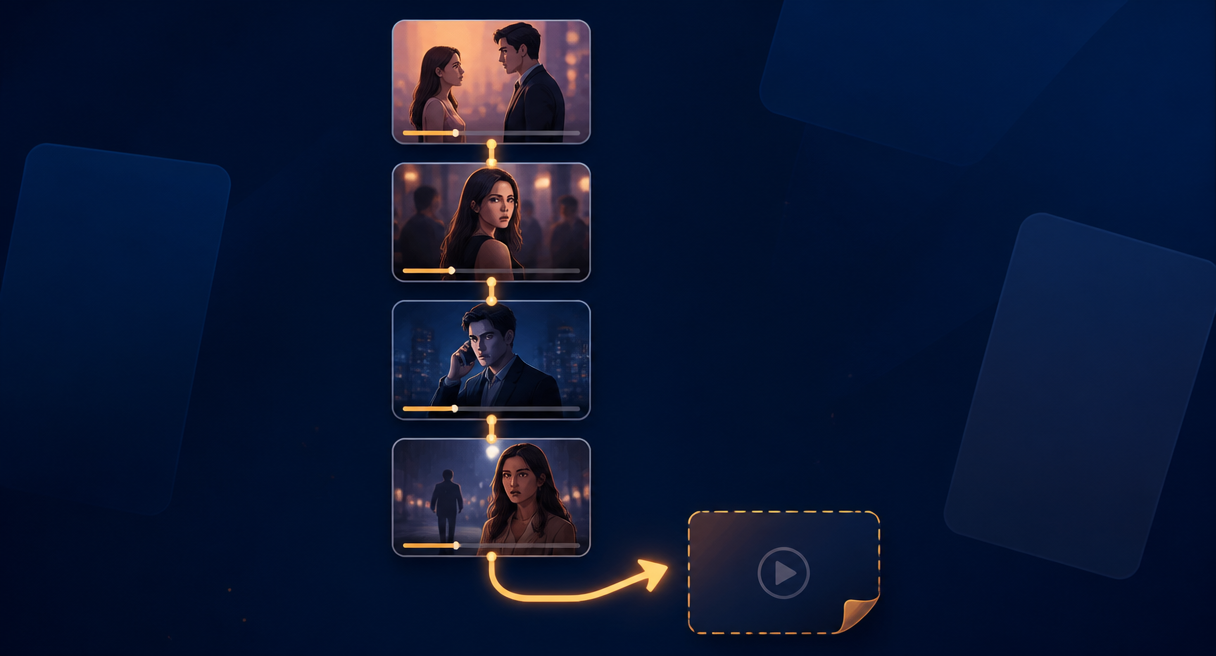
A vertical drama series is a scripted show told across dozens of portrait-video episodes of one to three minutes, the story built as one continuous chain of 40 to 100+ installments. Three features organize the form: scale, cliffhanger-to-cliffhanger continuity, and release rhythm; the series itself stays separate from the app that carries it.
You open a short drama app to watch one episode, and dozens of installments later you are still tapping next. That momentum is the design. A vertical drama series is a scripted show told in short vertical episodes, usually 40 to 100+ installments of one to three minutes each, watched in sequence on a phone. The term describes the content structure, and the structure is what makes the format work. Where a traditional show parcels out a season in eight to twelve long episodes, a vertical drama series moves in dozens of small steps.
Three features define the series form. The first is scale: a complete series runs somewhere between 40 and well over 100 episodes, an order of magnitude more than a standard streaming season. The second is continuity: each episode ends on a hook, a revelation, a reversal, or a decision point, and the next episode resolves it immediately, so the pull to continue is built into the structure itself. The third is release rhythm: some vertical series drop a full season at once for binge viewing, while others add episodes on a weekly cadence, and both patterns sit side by side in the current market.
The app is a separate thing from the series. A short drama app is the platform that hosts and plays these shows; a vertical drama series is one of the shows. In practice, the platform determines where you watch; the series determines how many episodes, branches, and seasons run.
A vertical drama series is one show told across 40 to 100+ short portrait episodes; the app is the platform that carries dozens of them.
Episode structure: how vertical series organize their stories
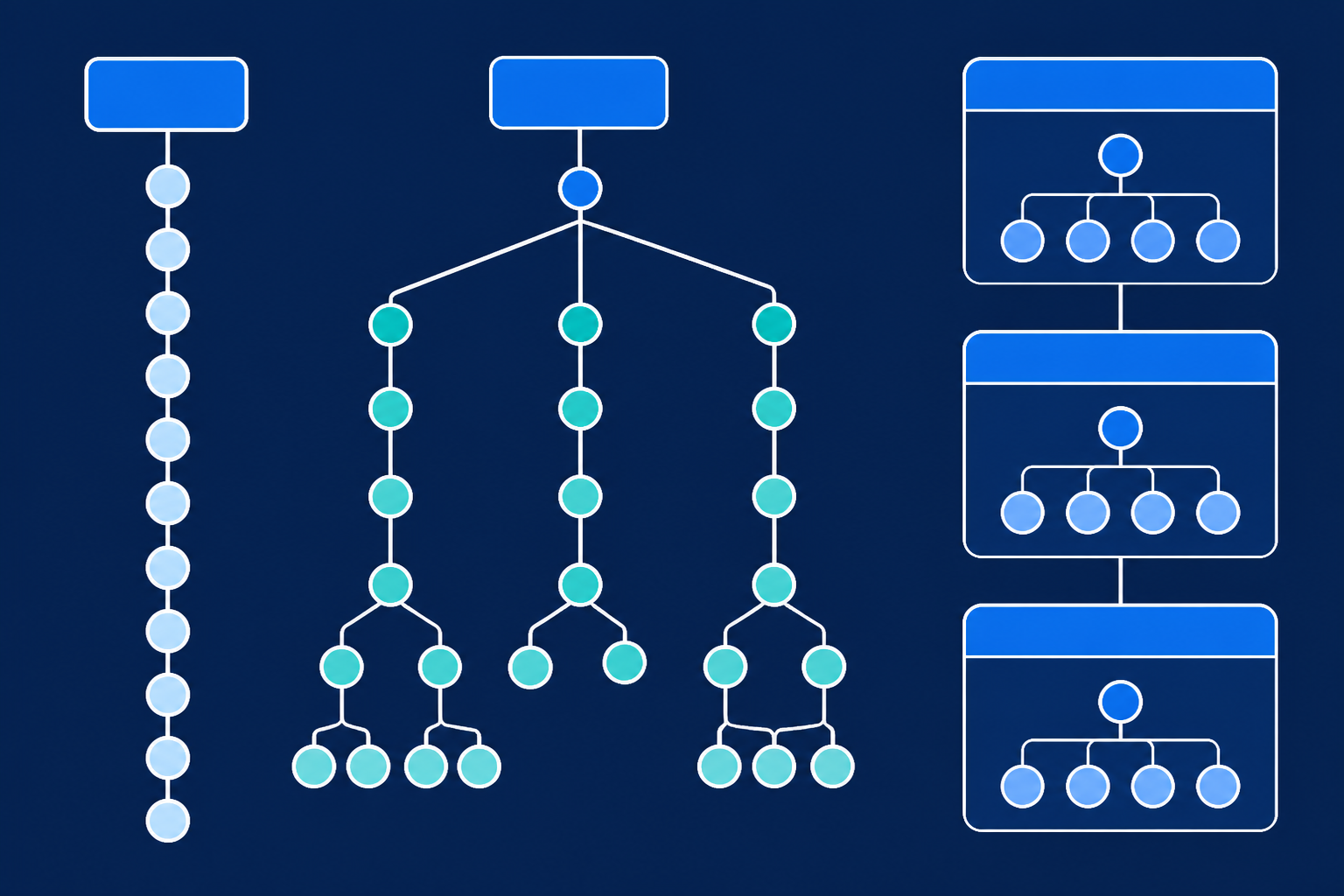
**Vertical drama series organize their stories in three shapes: single-season titles of 30 to 50 episodes, branching interactive drama series of 74 or 87 episodes, and multi-season serials that return every few weeks. Sterling Lies, Blood on the Badge, and a three-season 62-episode serial anchor each pattern with real numbers.**
The most common shape is the single-season vertical series of 30 to 50 episodes. On DRAMAGO — an AI-native cinematic entertainment platform whose catalog includes interactive and linear vertical drama series — that is the footprint of a typical A-tier interactive drama series, enough episodes for a full arc with story choices and character interaction woven through. Viewers finish one in a handful of sittings, and the branch points add replay value after the first run.
Interactive titles stretch the structure further. Sterling Lies runs 74 episodes with the story splitting into three branch lines, following Sander, Julian, or Leo, so one series holds three different routes through the same mystery. Blood on the Badge goes wider still, with 87 episodes and 14 branches, each ending reached only by its particular path. In both cases the episode count is doing narrative work: every branch needs enough installments to read as a complete story of its own.
Seasons are the third pattern. A Crown of Venom, an AI-produced live-action series on DRAMAGO, released three seasons within a single autumn — 62 episodes in total, with the seasons arriving on October 2, October 20, and November 3 of 2025. That cadence, a new season roughly every two to three weeks, shows the format treating a season as a continuation device for keeping a story alive. To see these structures side by side, you can browse vertical drama series in the DRAMAGO library in the app.
In a vertical drama series, the episode count signals the structure: 30 to 50 episodes mean a single arc, 74 to 87 mean branching routes, and a new batch every few weeks means a multi-season serial.
Vertical vs. horizontal: why the format changed the storytelling
The 9:16 portrait frame changed three things about how drama is told: framing leans on close-ups and faces, pacing forces a hook into every one-to-three-minute episode, and interaction becomes native to the phone screen. DRAMAGO (www.dramagostudio.com) designs its interactive series around that portrait position.
Framing came first. A phone screen in portrait orientation is tall and narrow, so wide establishing shots carry less information than they do on a television. Directors of vertical drama series work in close-ups and medium shots, keeping faces and reactions central, and that close framing is part of why the format connects quickly with viewers.
Pacing followed. With episodes of one to three minutes, there is no room for a slow cold open. Writers put a hook in every episode, and the structure of a vertical drama series, dozens of linked cliffhangers, turns that constraint into a style: the story advances every time the screen comes on.
Interaction is the newest change, and it belongs to the vertical frame specifically. Choice nodes and timed prompts feel native in a portrait full-screen view, where a thumb is already resting on the display, and awkward when a horizontal video has to pause and shrink itself to offer options. DRAMAGO (www.dramagostudio.com) builds its interactive series around this coupling, with story choices and timed quick-time events designed for the portrait viewing position from the start.
The portrait frame keeps the story at thumb distance, so a vertical drama series can offer a choice node inside the same full-screen view where the viewer's thumb already rests.
Where to watch vertical drama series
Vertical drama series are watched through dedicated apps, and the DRAMAGO app covers the App Store (November 2024), Google Play (March 2025).
The DRAMAGO app carries its vertical drama series on both major stores, launching on the App Store in November 2024 and on Google Play in March 2025. Language coverage runs to seven options, English, Spanish, Portuguese, French, Indonesian, Traditional Chinese, and Japanese, which matters for a format whose audience is spread across the Americas, Europe, and Asia. The service lists North America as its primary market, with Brazil and France as the next two, and the language list tracks those markets directly.
For a first series, the entry point is the same library, whether browsing by genre or by interaction depth. Opening episodes play free, and the rest of a series unlocks with in-app credits.
Frequently asked questions
How many episodes does a vertical drama series have?
Most single-season titles run 30 to 50 episodes. Branching interactive series run longer, 74 episodes for Sterling Lies and 87 for Blood on the Badge, and multi-season serials add new installments with each season.
How long does it take to finish a vertical drama series?
A 50-episode series takes roughly two hours to finish, at two to three minutes per episode. Longer interactive titles take more, and taking different branches extends the time again.
What does vertical mean in a vertical drama series?
It refers to the 9:16 portrait framing, video shot to fill a phone screen held upright, without black bars or cropping.
Do vertical drama series have seasons?
Some do. Alongside single-season titles, DRAMAGO has released a three-season AI live-action series totaling 62 episodes, with seasons arriving a few weeks apart.
Can I watch vertical drama series in languages other than English?
Yes. The DRAMAGO app ships in seven languages, among them Spanish, Portuguese, French, Indonesian, Traditional Chinese, and Japanese.