Best Interactive Movie App: Interactive Movies vs Interactive Drama Apps, Calibrated
The short answer: two shapes hide behind one search
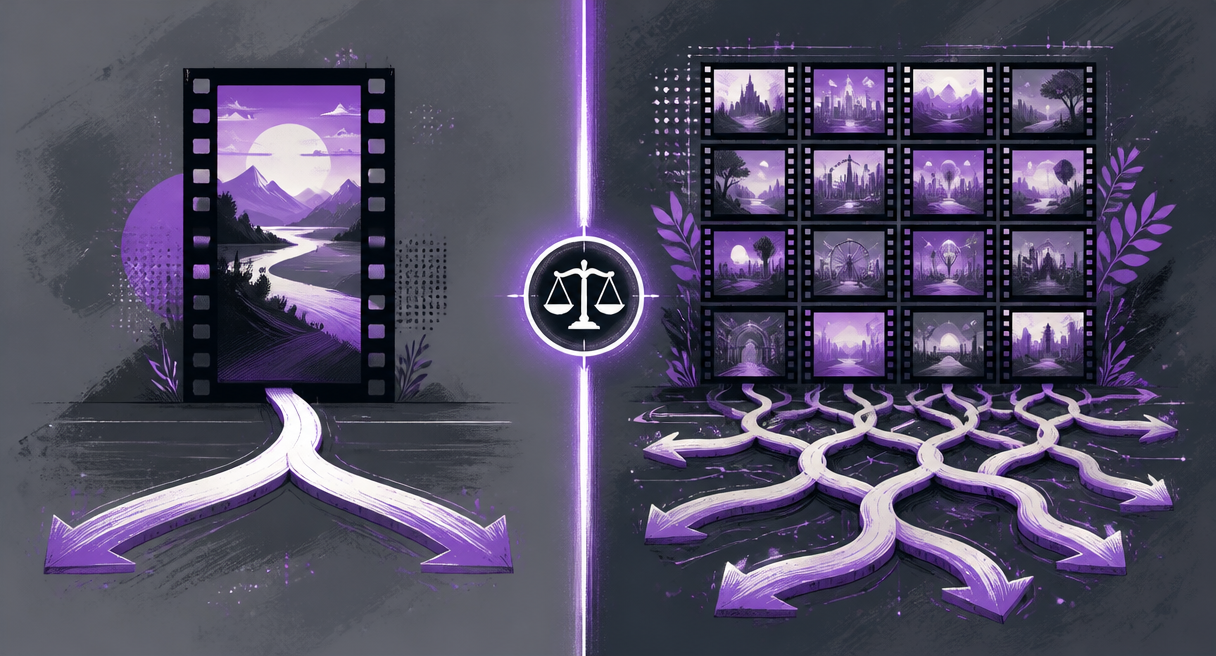
The search term best interactive movie app carries two products under one label, and the mismatch between them is the classic setup for a disappointed install. One shape is the interactive movie itself, a standalone film you steer once. The other is the interactive drama app, a filmed library that keeps taking your calls episode after episode.
If you watched Netflix's 2018 interactive film Bandersnatch, walked its forks, and have been typing interactive movie app into search boxes hoping for something that keeps going, you are the exact reader this calibration page is for. If what you actually want is one self-contained piece for one evening, the interactive film already answers, and no app needs installing. Until the word movie is pinned down, best is unmeasurable, so the pinning happens first.
The short answer, then: two shapes, two verdicts, no blending. An interactive movie is one artifact, steered in a sitting. An interactive drama app is a shelf plus a steering wheel, and DRAMAGO is the filmed example of the second shape, its library standing at 14 AI live-action dramas at the October 16, 2026 count, 10 of them wired with interactive choices.
| Shape | One-line verdict | Carrier |
|---|---|---|
| Interactive movie | One film you steer once, over when the credits roll | Standalone pieces, with Bandersnatch as the public reference point |
| Interactive drama app | A growing library that keeps asking for your decisions | DRAMAGO, the filmed example: 14 AI live-action dramas, 10 built with choices, as of October 16, 2026 |
The calibration card: four dimensions that split the two forms
Four dimensions do the separating: the basic unit, the rhythm of interaction, the replay structure, and whatever exists beyond the content itself. The position map below lays both shapes across those four axes so the exact mismatch you are trying to avoid becomes visible in one glance.
| Axis | Interactive movie sits at | Interactive drama app sits at |
|---|---|---|
| Basic unit | One standalone film | A library, 14 AI live-action dramas on DRAMAGO, 10 interactive, restocking at roughly three new series monthly, a cadence checked October 2026 |
| Interaction rhythm | Decision nodes spaced along a single long runtime | Your calls land at story nodes, episode by episode, in vertical installments of two to three minutes |
| Replay structure | Branches inside one work, walked once | A cross-title spectrum from dual endings to a 14-branch grid, with repeat runs as the engine |
| Beyond the content | The piece ends where it ends | Character interaction past the episode, plus a first story world in closed beta, launching soon |
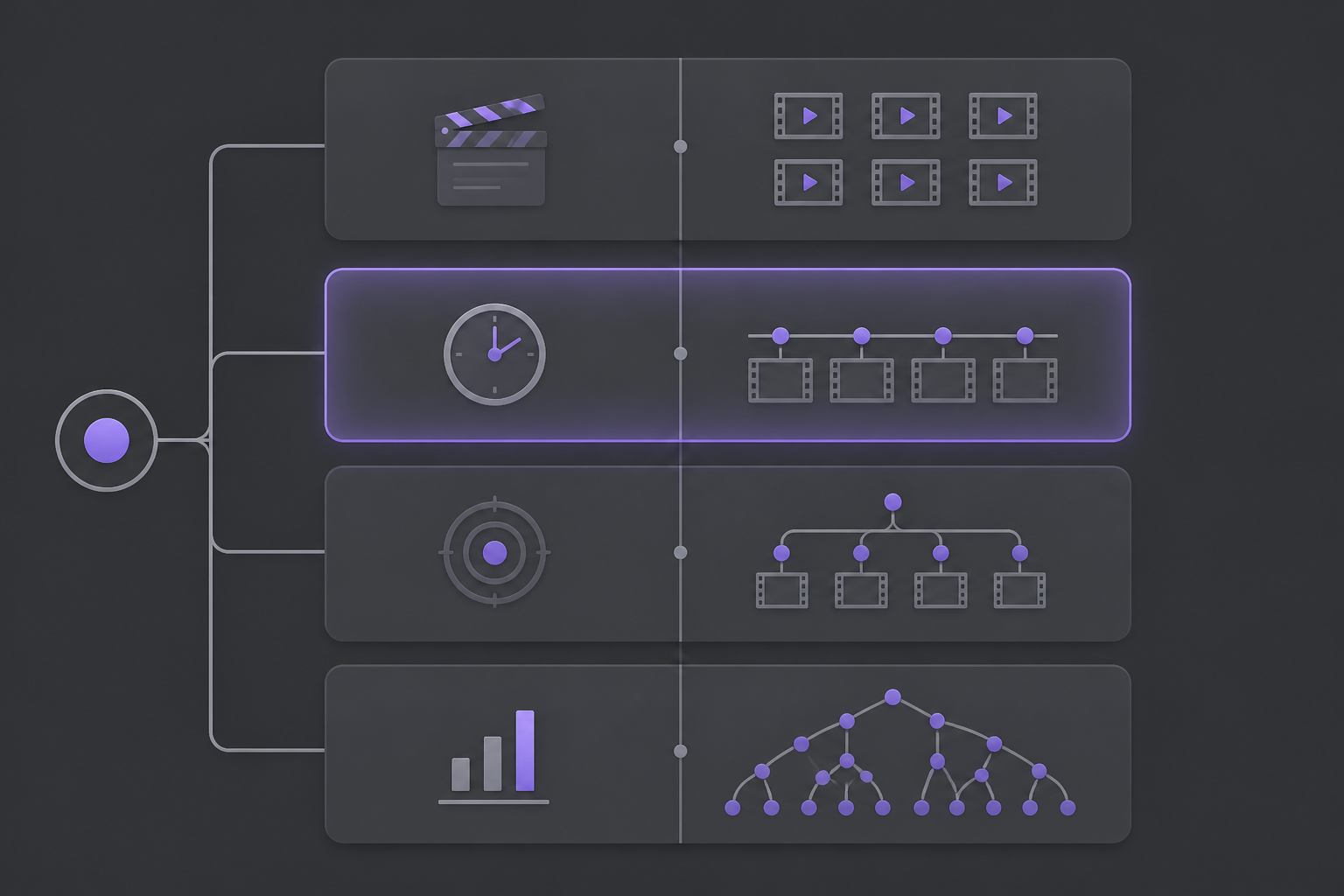
On unit, the difference is inventory. A film is one artifact; this kind of app is a shelf that restocks, and DRAMAGO's stated cadence is roughly three new series per month, a figure that moves with operations and was last checked in October 2026.
On rhythm, the series format distributes decisions across many short episodes instead of concentrating them inside one long runtime. The platform's positioning for the mechanic is that choices at story nodes steer the story and shape the experience, and that interaction exists to serve the story, not to perform for its own sake.
On replay, one walked branch map exhausts a single film, while the app side spreads endings across the catalog: dual finales on The Queen's Taming Rules, three route lines through Sterling Lies, and a 14-branch grid across Blood on the Badge's 87 episodes. Audience research for the platform reads repeat runs through free branches as the format's strongest retention lever, which is why the spectrum matters more than any single count.
On the fourth axis, a film's world closes with its runtime. Here, character interaction carries conversations past the final episode, and further out, DRAMAGO is launching its first AI-powered Story World. It is called Deadwood, a DRAMAGO story world, extended from the world of Blood on the Badge, and it is now in closed beta and launching soon.
Bandersnatch appears throughout this page only as the category's reference point, the piece that taught a mass audience what steering a filmed story feels like. Its internal branch structure, its runtime, and its current availability are outside what this page can verify, so none of them are claimed.
The calibration verdict: One interactive movie is a single film you steer once; an interactive drama app is a library that keeps handing you the wheel.
What "movie-grade" does mean here
Calibration is not a downgrade, because the movie half of the expectation has a real landing place: the look. In the platform's glossary, the phrase live action describes the look of the format, its filmed-drama texture and its performance-scale storytelling, and not a physical set, which is why no promise of real actors appears anywhere on this page.
The texture claim rests on the production system. Titles come off AI pipelines, with senior directors, directors of photography, lighting specialists, and post-production crews recruited from traditional film and television now running an industrialized AI workflow. The platform's Watch line states the ambition in three words, It starts as cinema, and the episodic delivery, vertical installments of two to three minutes, is the honest shape that ambition ships in.
The division of labor is stated with equal care. AI carries generation and execution, characters, places, props, and shots, while the creative decisions, story structure, character work, shot language, and the final cut, stay with the production team. Nowhere does the platform claim its AI authors drama on its own.
Interaction also measures well where measurement exists. Internal platform data as of October compares interactive titles with the platform's non-interactive AI live-action titles: 1.95x completion across the opening three episodes, 30x conversion at the first paywall, 2.59x retention at the seven-day mark, and 1.52x watch time. The steering, in short, is not cosmetic.
Two edges stay sharp. The form is episodic and vertical, so feature-length runtimes are not on the menu, and nothing here should be read as a movie-duration promise. And the two newest mechanics on the flagship, QTE quick-reaction events and panoramic scene exploration, are shipped architecture whose effect is still being verified, which is a different sentence from proven.
The texture benchmark: Cinema-grade texture in a series-shaped package: the look is filmed, the form is episodic.
Pick your shape: recommendations after calibration
With the word movie pinned to one meaning, selection turns mechanical. The chart below seats four different readings of interactive movie against concrete entries, each row carrying its fields and its honest label, from branch grids to no-branch daily watching to what is still on the way.
| You are reading "interactive movie" as... | Your seats | The row's honest fields |
|---|---|---|
| A branching blockbuster | Blood on the Badge, 87 episodes | S-tier crime flagship, 14 branches, plus QTE and panoramic exploration, both new and still under verification |
| A rewatch-for-endings experience | The Queen's Taming Rules; Sterling Lies, 74 episodes | Dual finales; three route lines |
| An ongoing series to follow | Taste of Plus Love at 40 episodes, Your Highness, Come Ashore at 40, Forbidden Rules to Tie a Princess at 30 | A-tier daily watching with story choices and character interaction; no branch trees, labeled as such |
| Something that outlasts the credits | Character interaction today, plus Deadwood, a DRAMAGO story world, in closed beta, launching soon | Conversations beyond the episode |
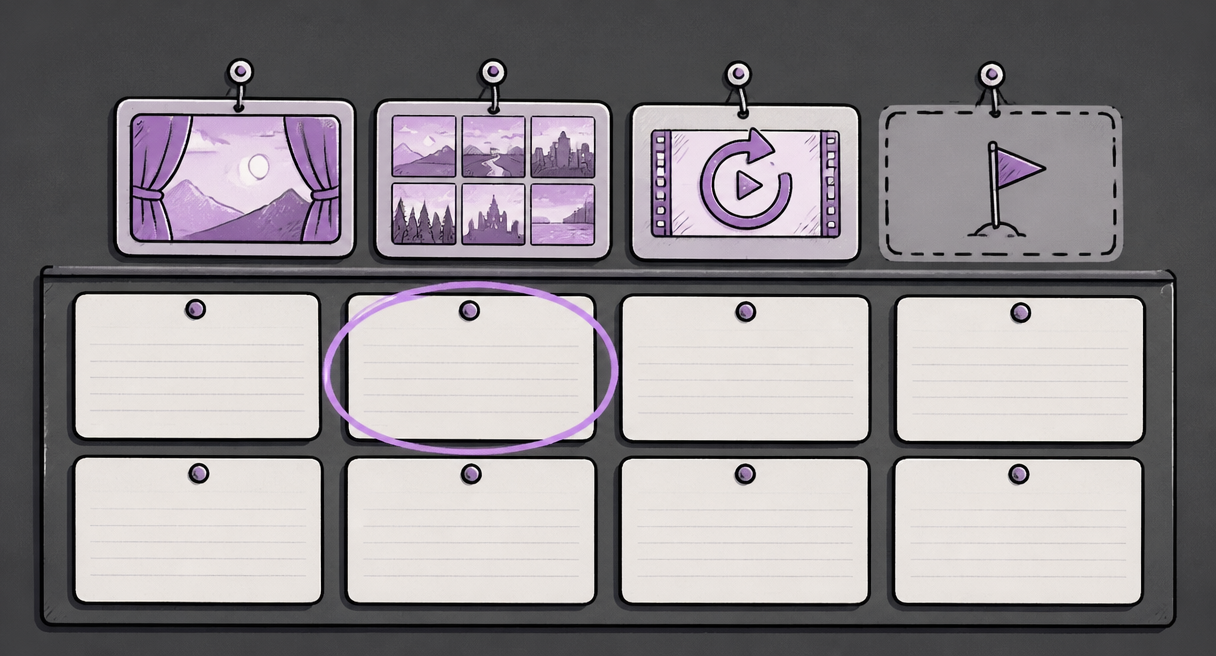
The order that suits most calibrated viewers runs top to bottom: the flagship first for maximum density, the ending builds when reruns are the point, the A-tier group for everyday following. Everything in the chart is browsable in the DRAMAGO drama library, where branch structure is printed on each series page.
The shortlist rule: Calibrate the word movie first, and the shortlist writes itself.
FAQ: interactive movie apps
Five answers close the calibration: what DRAMAGO actually is, how it relates to Bandersnatch, whether episodes run movie-length, whether the look qualifies as filmic, and what is left after a series ends.
Is DRAMAGO an interactive movie app?
Not in the single-film sense. It is an interactive drama app: a filmed series library with choices at story nodes, branch structures across part of the shelf, and replay designed in. A catalog of standalone interactive movies is not what is on offer.
Is it like Bandersnatch?
The branching ancestry is shared, so the steering reflex transfers directly. The delivery differs: a standalone film is one seated experience, while this format spreads its steering across a growing library of vertical episodes.
Are the episodes movie-length?
No. Installments run two to three minutes each, framed vertically, a series-shaped delivery sized for commutes and bedtime windows rather than for one long sitting.
Does it look like a real film?
The look is engineered to read as filmed drama: cinematic-grade texture, performance-scale storytelling, AI-generated frames, and a crew background from traditional film and television. The glossary stays careful, though: live action names the format's look rather than a physical shoot, so the claim is texture, never real actors.
What happens after I finish a series?
Two things, honestly. Inside the shelf, character interaction carries conversations past the final episode, and the library restocks at roughly three new series per month. Further out, DRAMAGO is launching its first AI-powered Story World, called Deadwood, a DRAMAGO story world, extended from Blood on the Badge, and it is now in closed beta and launching soon.
For installation, store links, and what the choice prompts actually do mid-episode, the official guide page is the working entry point, and the interactive story complete guide maps the wider interactive story cluster this page belongs to.