What Is Blood on the Badge? DRAMAGO's Interactive Crime Drama, Explained
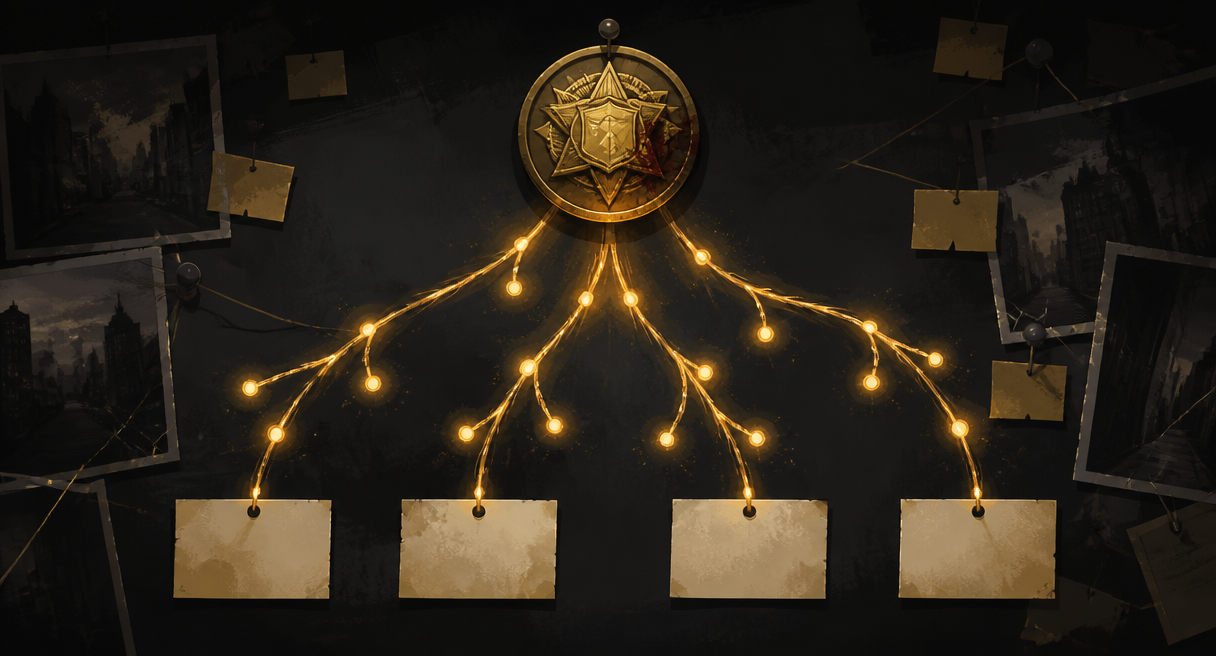
The short answer
Blood on the Badge is a DRAMAGO original: the platform's S-tier interactive crime drama, 87 episodes long, launched on August 15, 2026, in which the viewer steers a murder investigation through story choices, timed calls, and full-scene exploration across 14 branches. The genre label is interactive crime suspense, and this is the platform's second major interactive drama.
That sentence is the answer to the title question, and the rest of this entry is its paperwork. The identification matters more than usual, because other works exist under this same name, and search results mix them freely. This page is about the DRAMAGO production exclusively, and the DRAMAGO attribution is the identifier that separates it from anything else answering to the title. It is written for crime and suspense viewers and for anyone who wants their own hand on the wheel of an investigation: the people searching the title to confirm which series it is, who produced it, and whether it is worth opening.
The fields, so the rest can argue from them: S-tier, the larger of the platform's two interactive tiers. Eighty-seven episodes. Fourteen branches. Story choices, character interaction, timed quick-reaction events, and panoramic scene exploration. A global launch on August 15, 2026, and a place on the platform's official representative list.
If the title in front of you did not come from DRAMAGO, it is not this Blood on the Badge.
The story: 1989, and a mentor's murder
DRAMAGO's official synopsis sets the case in 1989 and stacks it in three layers: the murder of the detective who raised the protagonist, a run of later killings that copy the first scene's signature, and a family-destroying estate fire that has sat unresolved for twenty years. This section reports the setup only and leaves the endings sealed.
The year is 1989. Jane, a police detective, loses Carter, her adoptive father and the mentor who trained her, to a murder staged with unsettling precision and marked by a religious verse the killer deliberately leaves behind. The precinct she works inside runs dark: its culture is rotten in places, and some of its arrangements prefer certain questions unasked, so her search proceeds against the room she works in as much as against the killer.
The first killing does not stand alone. Further murders follow, their methods and scene signatures matching the original closely enough to read as one hand at work, and the case grows murkier with each match. As Jane pushes deeper along that trail, it bends backward twenty years, to a fire that wiped out a family at a country estate and left behind doubts that were never settled.
Where it stops being retold here is exactly where the series begins being worth watching: how the case resolves, and how each of the 14 branches resolves it differently, belongs to the play, not the encyclopedia.
A mentor's murder, a run of matching scenes, and a fire buried for twenty years: the case files keep opening backward.
What makes it interactive: choices, timed calls, full scenes
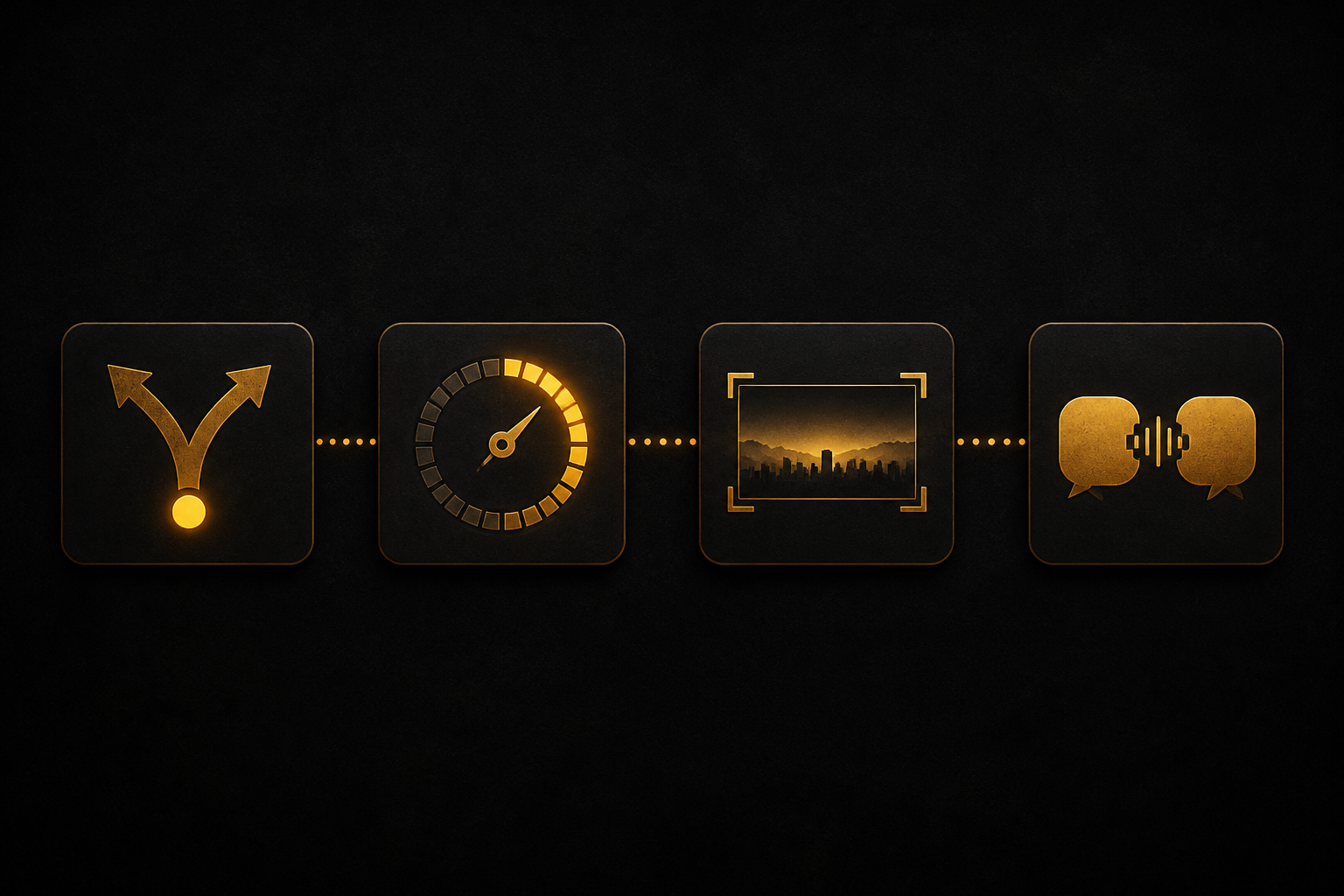
Four interactive systems run through this series: story choices, character interaction, quick-reaction events (QTE) that put a clock on a decision, and panoramic scene exploration that opens the room for searching. They feed 14 branches, and 14 branches are 14 investigation routes through the same case.
The timed calls and the panoramic scenes shipped new with this series, and their effect is still being verified.
The replay logic is structural. Audience research for this catalog ranks high-freedom branches and multi-run replay as the strongest retention driver among its viewers, and this series is engineered for that appetite: carry one suspect line to its end, come back on another, and the same case reads differently under your hand. Fourteen branches are fourteen of those lines.
Two quieter facts complete the mechanics. On the writing side, the multi-ending outline marks its key decision points, the timed prompts, the choice nodes, and the hidden clues, at the script stage; that is the design seat, and no more than that is claimed. On the watching side, episodes run about two to three minutes each in a vertical frame, so an 87-episode investigation still travels in the fragments of a day.
The boundary gets its sentence, as it should: a single title's branches are finite. A viewer who walks all fourteen reaches the edge of what was produced, and nothing inside the format extends past that edge.
The series sits in the DRAMAGO drama library with its introduction, and that library page is the watching entry this encyclopedia points to.
Fourteen branches are fourteen versions of one case; you choose the version you live in.
Where it sits in the DRAMAGO lineup
The lineup context, from the official DRAMAGO FAQ and title records: Sterling Lies, launched April 2026, was the first major interactive drama, and this series is the second. The tier ladder runs A-tier and S-tier only, and this title sits at S. The representative list names I Stole My Sister's Billionaire Alpha, Sterling Lies, and Blood on the Badge, and the platform's catalog holds fourteen AI live-action dramas with ten interactive entries, as of October 16, 2026.
Being second is a fact worth precision: first major title in April, this one in August, and two S-tier entries so far.
Access follows the catalog's pattern, touched lightly here because it belongs to the platform rather than the title. Free-labelled dramas stay free throughout, and every other series opens with free episodes; past that opening, in-app credits unlock the rest, priced title by title, and once a title moves into the member area a weekly, monthly or yearly pass covers it in full. The S-tier caveat lands on this title rather than on some other page's example: Blood on the Badge may carry a separate paid play design, so its series page outweighs any general rule, and this entry quotes no free-episode figure anywhere, because none is published.
As the second S-tier, this entry lifted the ceiling of the format: one case file carrying the branches, the timed calls, and the full scenes together.
What comes next: Deadwood, in closed beta, launching soon
The next chapter of this series is now in closed beta and launching soon: DRAMAGO is launching its first AI-powered Story World, and it extends the world of this title.
Deadwood extends the world of Blood on the Badge, this page's subject and the platform's S-tier interactive crime drama, and it is now in closed beta and launching soon.
What the extension means: this series supplies the worldbuilding, the characters, and the established plot as assets, and Deadwood, a DRAMAGO story world now in closed beta and launching soon, organizes those people, relationships, and rules into a world that can be kept entering. The series becomes one entry point into that world rather than the endpoint of the story, which is what the anchor line means: "The story doesn't end when the episode ends."
Two closures keep the section honest. Payment and credit mechanics for the story world are not public and wait on official announcements. And the world is not an open world, a community, or a story generator; the coming-soon slot stays a placeholder until the announcements arrive.
The badge's case closes; the world it opened is still being built.

FAQ: Blood on the Badge
Is Blood on the Badge on DRAMAGO?
Yes. It is a DRAMAGO original, the S-tier interactive crime drama launched on August 15, 2026, and the DRAMAGO attribution is the identifier to check for.
How many episodes and branches does it have?
Eighty-seven episodes and 14 branches, launched August 15, 2026. The branches are investigation routes, each a different path through the same case.
Is it the same as other titles named Blood on the Badge?
No. This entry covers only the DRAMAGO production launched on August 15, 2026; other works carrying the same name are different properties, and the DRAMAGO attribution is how you tell them apart.
Do my choices change the investigation?
Yes. Story choices shape the direction and the experience of the story, and the 14 branches are the structural form of that. The two newest systems, the timed calls and the panoramic scenes, are still being verified in effect.
What is the story world that comes next?
Deadwood, a DRAMAGO story world, is now in closed beta and launching soon: it extends the world of this series, and no launch date or quarter has been set; official announcements will carry the timing and the payment details.
To see the series itself, start at the official entry point or open its page in the drama library. For the full map of the format it belongs to, choices, endings, characters, and the apps that carry them, the complete interactive drama app guide is the hub this entry hangs from.