Short Drama App: The Complete Guide to Vertical Drama, Free Access, and Costs
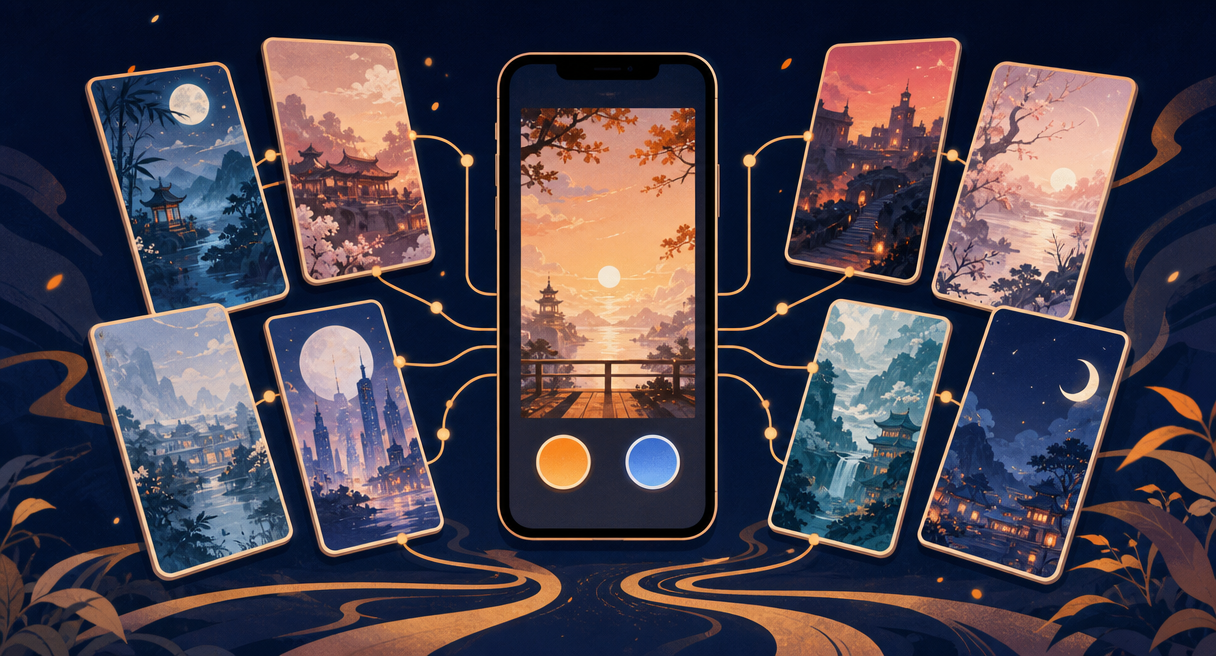
This page gathers the whole category in one place, with DRAMAGO as the reference platform throughout: what a short drama app is, the vertical formats inside it, what free access covers, how costs are structured, how to choose and start, and the practical facts about languages and connectivity. Each section ends with a deeper read for readers who want the full answer to that specific question.
What is a short drama app?
A short drama app is a phone-first streaming platform for scripted vertical series: episodes shot for the upright 9:16 screen, one to three minutes each and usually two to three, with complete stories spread across dozens of installments. Some titles stay linear; others pause the story and hand the decisions to the viewer. The what is a short drama app deep read unpacks the definition piece by piece.
DRAMAGO is an AI-native cinematic entertainment platform: a single platform carrying three capability layers that cover film-grade AI production, original content and IP, and the interactive consumer experience. The interactive layer is where the category is moving fastest, and its working mechanics are story choices, multiple endings, timed quick reaction events, panoramic scenes to explore, and character interaction.
The catalog shows the range in hard numbers. Blood on the Badge runs 87 episodes with 14 branches. Sterling Lies covers 74 episodes across three storylines. The Queen's Taming Rules delivers 40 episodes with two endings. Thirteen AI live action dramas make up today's catalog, and nine of them are interactive, spanning everything from full branching S-tier series to straight linear watching.
Browsing is the natural first move here: the drama library collects every current title with its introduction, and skimming it takes minutes.
Vertical drama formats: series vs. single titles
The format runs on two working units, the series and the single title, and the pair explains most of the vocabulary. A vertical drama series is the multi-episode serial form; a vertical drama is one complete show inside it.
The series card. Dozens of linked episodes, vertical by design, arranged in a scrolling feed and released by season or in batches. Continuity is the engine: each episode closes on a turn, and the next episode picks it up immediately, which is why one episode so rarely stays one episode.
The single title card. One complete vertical drama, 30 to 87 episodes in the current catalog, each episode a one-to-three-minute unit. Length signals structure inside the title: branching runs sit at the long end of the range, single-arc stories toward the shorter end.
Underneath both units sits the 9:16 portrait frame, and it is not decoration: an upright phone held in one hand is the viewing position the entire format is engineered around, from framing to pacing to where the choice buttons land.
How much does a short drama app cost?
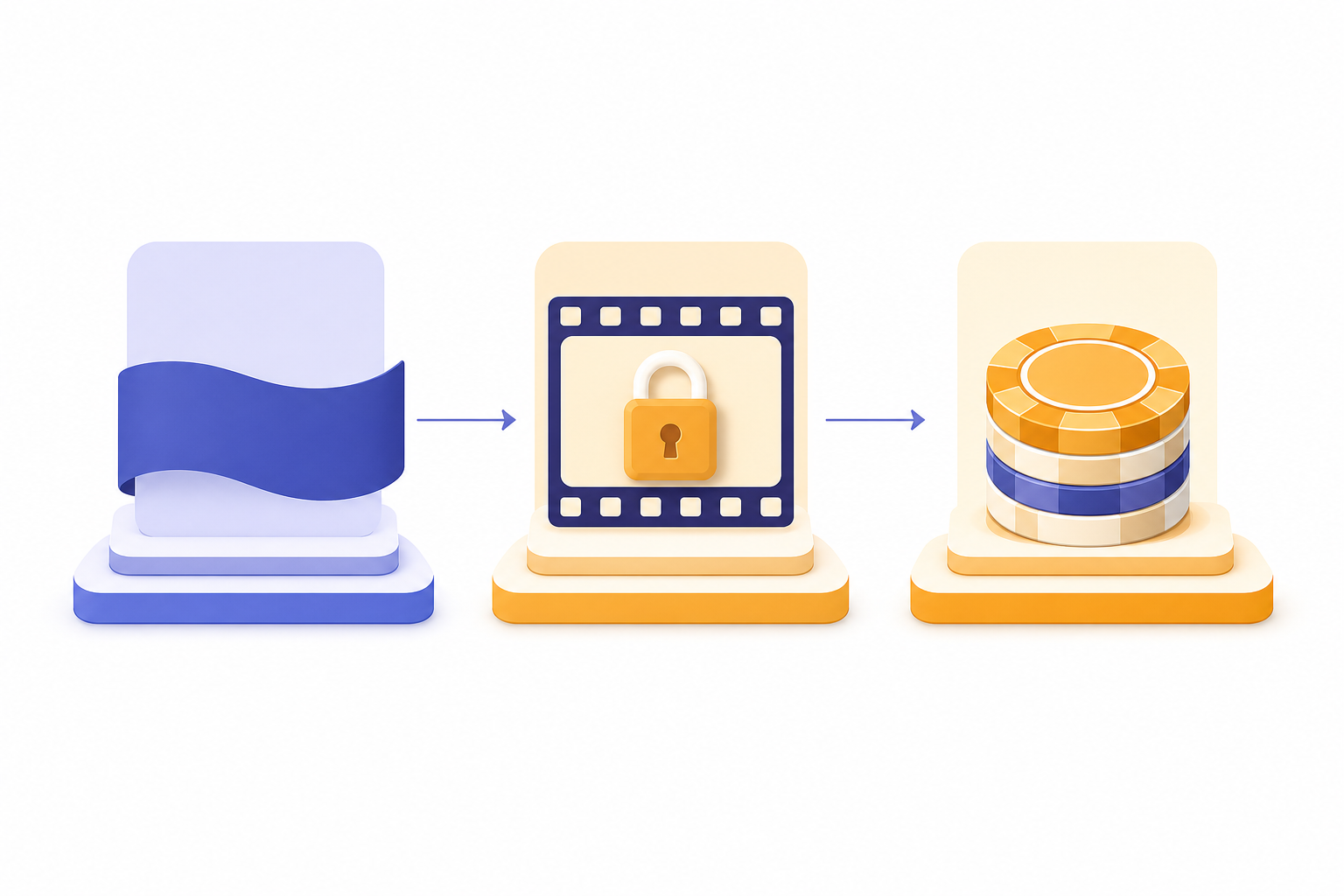
The app downloads free and every title starts free; spending begins at each story's first payment node, where episodes start unlocking with in-app credits. The how much does a short drama app cost deep read carries the full structure.
The model works in three moves: free download, a free stretch up to each title's first paid story point, then per-episode unlocking settled with credits, the platform's named in-app currency, bought on demand, with prices published in the store listings' in-app purchase section. This page explains the structure without quoting the numbers.
Across the category, costs arrive in three generic shapes: fixed opening episodes with per-episode purchasing after them, monthly all-access plans, and story-paced free tiers like DRAMAGO's. One boundary stays explicit: S-tier interactive titles may be set up differently, and Blood on the Badge could carry its own paid play arrangement, so a uniform payment rule is not claimed for the whole catalog.
Is a short drama app free? The free tier, explained
Free covers two things and stops at a third: the download is free, the opening stretch of every title is free, and the boundary sits at each story's first payment node, where in-app credits take over. The is a short drama app free deep read maps the boundary in detail.
The free tier is metered by story pacing rather than a fixed episode count, so depth varies from title to title, and interactive play, choices, branches, explorable scenes, sits inside the free stretch rather than behind it. Each title carries its own free starting point, so moving between series resets the meter at no cost.
The boundaries, stated plainly: the payment edge is the one the cost section above maps, credits past the first payment node. Character chat is built into the DRAMAGO app, not sold as its own package, and chat sessions run on credits. And free content volume is the category's most repeated viewer concern, so the honest framing is a real starting stretch with a visible edge, not an endless one.
Choosing an app: Android and beginner-friendly picks
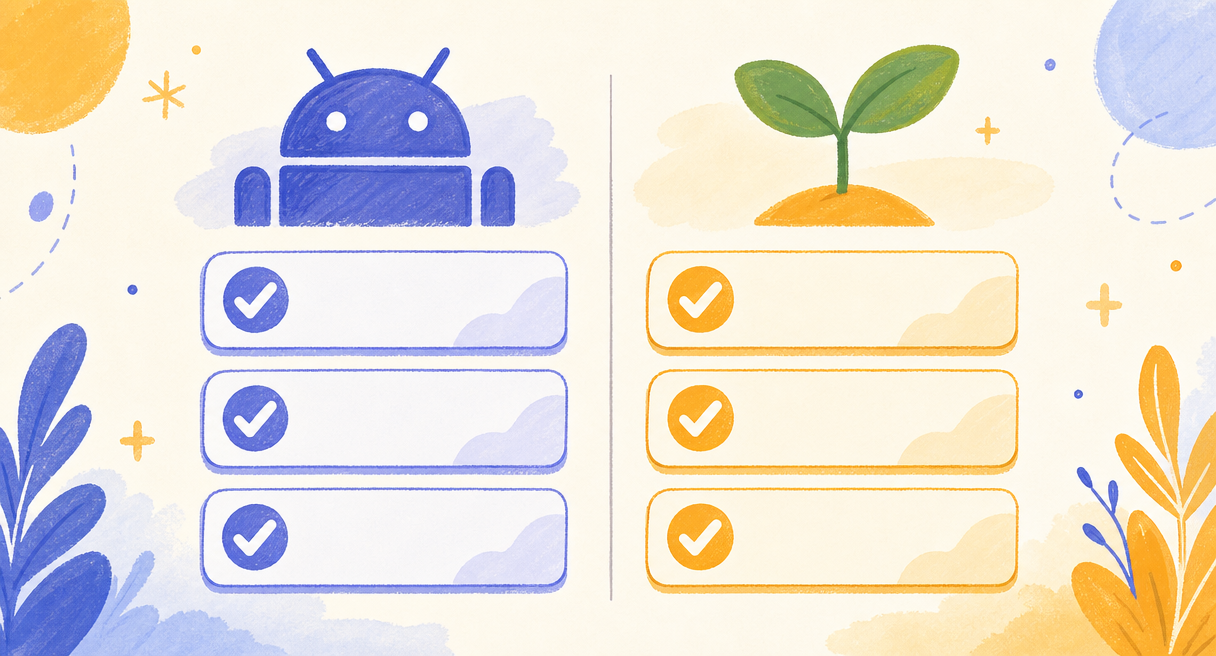
Choice in this category runs on criteria rather than brand names. Two lenses cover most readers: the Android install picture, and the beginner's first week.
The Android card. DRAMAGO arrived on the App Store in November 2024 and landed on Google Play in March 2025, so both major stores now carry it. The practical checks on any store page are the same: match the listed languages against your own, and read the stated device requirements before downloading. The best short drama app for Android deep read goes wider on the platform question.
The beginner card. Four criteria predict a good first week: how deep the free starting stretch runs, whether your language is covered, whether the interactive choices arrive naturally as the story opens, and how often the catalog updates. The best short drama app for beginners deep read walks that checklist step by step.
Free-first viewing: free drama apps and platforms
Free viewing across the category sorts into three meters. Fixed-count apps free the same opening episodes of every title. Monthly plans trade a sample shelf for a recurring fee. Story-paced apps, DRAMAGO included, free each title up to its first payment node.
Each meter yields one mechanism conclusion worth holding onto: fixed counts end at the count, monthly plans end at the fee, and story-paced tiers end at a story moment that moves with each title. None of the three runs free without end, so the comparison is really about where the edge sits and what the edge tells you before you reach it.
The phrase "drama box" deserves its own line, because it appears constantly in searches and usually names the category rather than a product: for most people it means the box of dramas, which is the app itself. Two deep reads carry the comparison from there: best free drama box app on the nickname and its mechanics, and best free drama platform on the platform-level framework.
Short drama in daily life: commutes and couples
Two everyday situations show what the format is engineered for: the commute, where short episodes and the upright frame fit single-handed gaps in the day, and shared watching, where choices turn viewing into a joint decision.
The commute card. Episodes of one to three minutes slot into station-to-station gaps, the portrait frame means the phone never has to turn, and playback resumes exactly where it paused, so interruptions cost nothing. The interactive story apps for your daily commute deep read builds the full commute playbook.
The couples card. Interactive titles hand two people the same decision points, and multiple endings mean different choices produce different fate lines, which is built-in rewatch value for a shared evening. The is drama shorts good for couples deep read takes that scenario further. Discovery often starts on social feeds, where short clips lead viewers to the app itself.
Languages and connectivity: subtitles and offline limits
Two practical facts close the logistics picture: the app interface is available in nine languages, and it does not offer offline viewing at present.
The languages card. DRAMAGO covers nine languages: English, Spanish, Portuguese, French, German, Arabic, Indonesian, Traditional Chinese, and Japanese, in the platform's official order. That count is an interface-level capability, not a promise that every single title ships in all nine. Localization in interactive drama also means more than subtitles: choice buttons, interface text, and story nodes all carry the language, or the experience splits mid beat. Markets follow the languages, with North America first and Brazil and France as the next tier. The Portuguese subtitles in interactive drama apps deep read shows what full localization looks like inside one language.
The offline card. Offline viewing is not supported at present and there is no download mode to enable. The honest mitigation is the format's own lightness: one-to-three-minute episodes stream in small pieces, so a session's data footprint stays modest by design. The offline viewing limits deep read explains the reasoning and the workarounds.
How to use a short drama app: quick start
Three steps cover the start: get the app, open any title free, and make the first choice or the first unlock.
Step 1: get the app. DRAMAGO is on the App Store, listed since November 2024, and on Google Play, listed since March 2025, or reachable through the official entry point.
Step 2: open a title. Every series starts free, and the free stretch runs to that title's first payment node, so the first sitting costs nothing by construction.
Step 3: choose and unlock. On interactive titles the story pauses for decisions at story nodes; when a title crosses its paid point, later episodes unlock with in-app credits, and the cost section above holds the structure. The how to use a short drama app deep read walks the complete walkthrough.
Official channels close the loop: DRAMAGO posts on Instagram and Facebook under its official handle and maintains channels on TikTok and YouTube.
FAQ: short drama app questions
Is a short drama app free to download?
Yes. The download and the opening stretch of every title cost nothing; spending starts only at each story's first payment node, with credits from there.
How much does it cost after the free part?
Episodes past the paid point unlock with in-app credits, settled per episode; amounts and pack options appear on the in-app purchase screen, the only authoritative source, so no number is quoted here.
What languages does it support?
The app interface is available in nine languages: English, Spanish, Portuguese, French, German, Arabic, Indonesian, Traditional Chinese, and Japanese. It is an interface-level capability rather than a per-title promise.
Can I watch offline?
Not at present. There is no download mode, so watching means streaming, and the short episode length keeps the data footprint small.
What makes interactive short drama different?
The story pauses at decision points and the viewer's choice steers later scenes and the ending, so two viewers can finish the same title differently. Linear titles, four of them in the current catalog, play straight through with no input.
Are all series priced the same?
No uniform rule is claimed: A-tier and linear titles follow the free-then-credits structure, while some S-tier series, Blood on the Badge among them, may use a separately designed paid play setup.
Is it made with AI?
Production runs on a film-grade AI workflow with professional creators directing and quality-controlling the output, and the catalog describes the results as AI live action drama.
More answers live on the official FAQ page, and the natural next stop after this category guide is the interactive story guide, the companion hub for the story-driven side of the format. The free stretch of any title remains the natural first step: open one, and the rest of this page falls into place.