How to Use AI Drama: From Your First Episode to Talking with Characters

Using an AI drama comes down to four moves in order: install the DRAMAGO app, watch its short vertical episodes with the opening ones free, choose at story nodes so the story reacts, and, in supported titles, keep talking with the characters between viewings. The app has been available on the App Store since November 2024 and on Google Play since March 2025, the app interface is available in nine languages, and none of this asks anything about AI from you. That last point is the surprise for most first-timers: the viewer watches finished cinematic episodes, and the AI stays behind the screen as a production method. This guide follows the path in the order a new viewer actually lives it.
What using an AI drama actually involves
"Use" carries two readings in this question, and this guide takes the everyday one. Watching and participating inside the finished app is the subject here; making an AI drama means producing one, which is a separate craft with its own article on this site. DRAMAGO itself describes the experience as four capability steps: Watch, Choose, Interact, and Enter the World.
Start with the download. The guide page is the official entry point on the web, with the app links and an overview of what the platform offers. Install from either store, open the app, and pick a series. Nothing in the setup asks about AI, because nothing in the experience depends on it.
That point deserves a sentence of its own. The official answer to whether any technical background is needed is a plain no: viewers watch complete cinematic episodes, and the AI operates behind the scenes as the production method. Curiosity about how episodes are made is welcome, but it is never a prerequisite for using them.
Watch: how AI drama episodes work
Episodes are built for one hand and one spare moment: a vertical frame, a cinema-grade look, and a running length short enough that a cliffhanger never feels far away. The official phrasing for this step is blunt, and it is a promise about production values: it starts as cinema.
Each episode runs one to three minutes, with two to three the common length. The DRAMAGO catalog behind those episodes stood at thirteen live-action AI dramas by early September 2026, nine of them interactive, with about three new titles arriving each month, last verified on September 21, 2026. The full drama catalog is the place to pick a first series, and every entry there lists its introduction.
The app interface ships in nine languages: English, Spanish, Portuguese, French, German, Arabic, and Indonesian, plus Traditional Chinese and Japanese, in the official order. It is an interface-level capability rather than a per-title promise, so a given series ships with the language set it ships with.
Offline viewing is the one flat no: the app currently supports no offline mode and no download option. The format absorbs most of that limitation, because episodes measured in single minutes keep streaming data light.
Choose: making choices that change the story
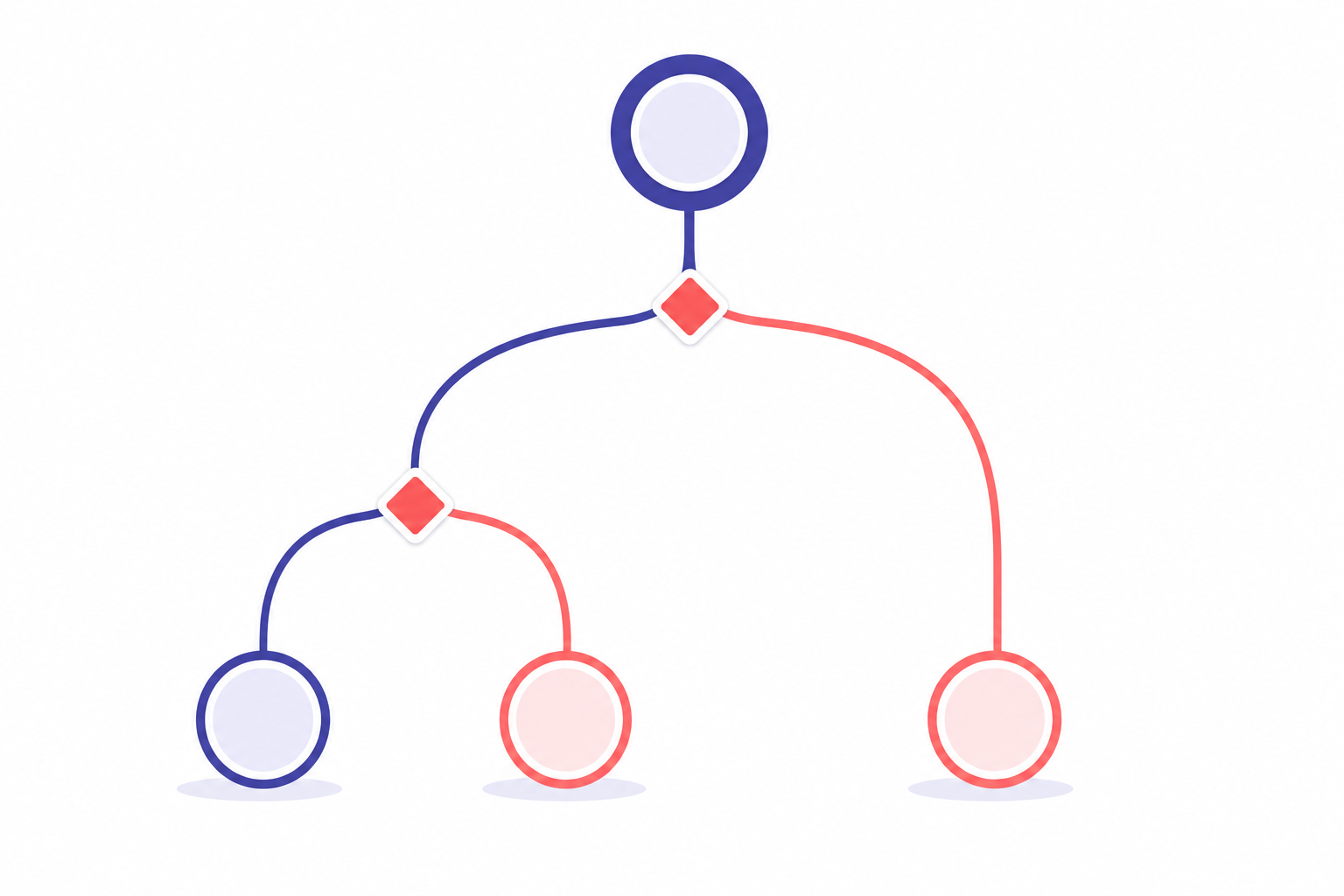
Choosing is the mechanic that separates an interactive drama from ordinary viewing. At certain story nodes the episode pauses, options appear, and the decision you make inside the time limit redirects the story. The official phrasing says your choices leave marks.
The interactive feature set, in official terms, covers six families: interactive story lines and options, multiple endings, AI face swap, character interaction, quick-time events, and panoramic scene exploration. In practice you meet three kinds of input. Plain choices pause the story and reroute it. Quick-time events demand a reaction inside a countdown. Multi-run play means returning to a fork and traveling a different branch line toward a different ending.
Real titles show how far the mechanic scales. Sterling Lies offers 74 episodes across three branch lines. Blood on the Badge runs 87 episodes, 14 branches, timed events, and explorable panoramic scenes. The Queen's Taming Rules closes its 40 episodes in two endings. The design principle behind all three: interaction serves the story, and a choice exists to change it, never to decorate it. On DRAMAGO's own catalog, interactive titles hold viewers longer than non-interactive ones: day-seven retention runs 2.59 times higher, and watch time runs 1.52 times higher.
Interact: beyond the episode
Interaction does not stop when an episode ends. Character chat keeps a series' cast available for conversation between viewings, and the official phrasing for this step is that the characters answer. It is the extension layer of interactive drama, and the forerunner of the story world described in the next section.
Character chat works the way the name suggests: you exchange messages with a character from a series, in that character's persona, drawing on the story you have both been through. Knowing the series first changes the conversation, because the character arrives with a history you share.
AI face swap, launched in February 2026, works at the feature level: in selected episode segments you can upload a face to replace a character on screen and deepen the immersion. Which segments and titles support it follows what the app actually offers, so the in-app feature list is the reference rather than any fixed catalog.
The billing boundary is worth stating precisely. Character chat ships inside the DRAMAGO app rather than as a stand-alone paid tier, though each chat session draws on in-app credits.
Enter the World: what's coming next
The fourth step is on its way. The official phrasing for it is "the world is still being built" — and the first one, Deadwood, is coming soon.
Deadwood grows out of the world of Blood on the Badge, an S-tier interactive crime series. A series hands over its world, its characters, and its established story assets; the story world organizes those people, relationships, and rules into a place that can be entered again and again. The point of the construction: a story no longer stops when its final episode rolls.
Two clarifications keep expectations honest. The doorway into the story world is the interactive series itself, not the character chat. And the first phase of a story world is not a game, a community feed, or a content generator; what users can do inside it, and how it is priced, will follow official announcements.

Frequently asked questions
Is DRAMAGO free to use?
Partly. Every title opens with free episodes, and past those, later episodes unlock with in-app credits. Flagship S-tier interactive titles may carry their own paid play design, so the model is not one-size-fits-all across the catalog.
Can I watch offline?
No. The app has no offline viewing and no download mode at present; the short episode format keeps the data cost of streaming low.
Do I need to know anything about AI to use it?
No. The app serves finished cinematic episodes, and the AI operates behind them as a production method. No technical background changes anything about the experience.
What languages does the platform support?
The app interface ships in nine languages, in the official order listed in the Watch section above. Check an individual title's listing for the language set it ships with.
And if watching ever makes you want to build rather than choose, the production side has its own guide: the six-stage build framework, and the zero-background entry point is its no-modeling companion. For the whole landscape in one place, from first branch to finished world, the full guide to interactive storytelling is the wider map.