How to Make an AI Drama Without Modeling Skills: What You Actually Need

No, you do not need modeling skills to make an AI drama. In a current production pipeline, AI generation creates the characters, locations, and props directly, so the 3D modeling route never comes up, and coding never does either. What the work actually demands is story structure, character writing, and camera judgment, which is a different and far more learnable toolkit. One honest boundary frames everything below: the DRAMAGO app today is a viewing and interaction platform, not a tool for user-made dramas, so the realistic paths run through personal projects and platform collaboration.
The short answer: no modeling skills required
The entry bar has moved, and it did not move to another technical skill. Official framing calls AI a force for technological equality in film creation: the barrier shifts away from heavy assets and specialized software stacks toward story and taste. That is the trade, and for a beginner it is a favorable one.
"Modeling skills" usually bundles three fears: 3D modeling and rigging, programming, and professional equipment. None of the three is the entry requirement any more, because generation replaced construction as the way assets come into existence. What remains yours to carry: the script and its branch structure, the characters and their arcs, shot language, and the aesthetic judgment that binds them together. Those are exactly the parts AI does not decide for you.
This article stays on the beginner question: what replaces modeling, which skills decide the result, and the three realistic routes from here. The full professional pipeline, stage by stage, has its own methodology piece on this site, and this one points to it at the end.
What replaces modeling in an AI pipeline
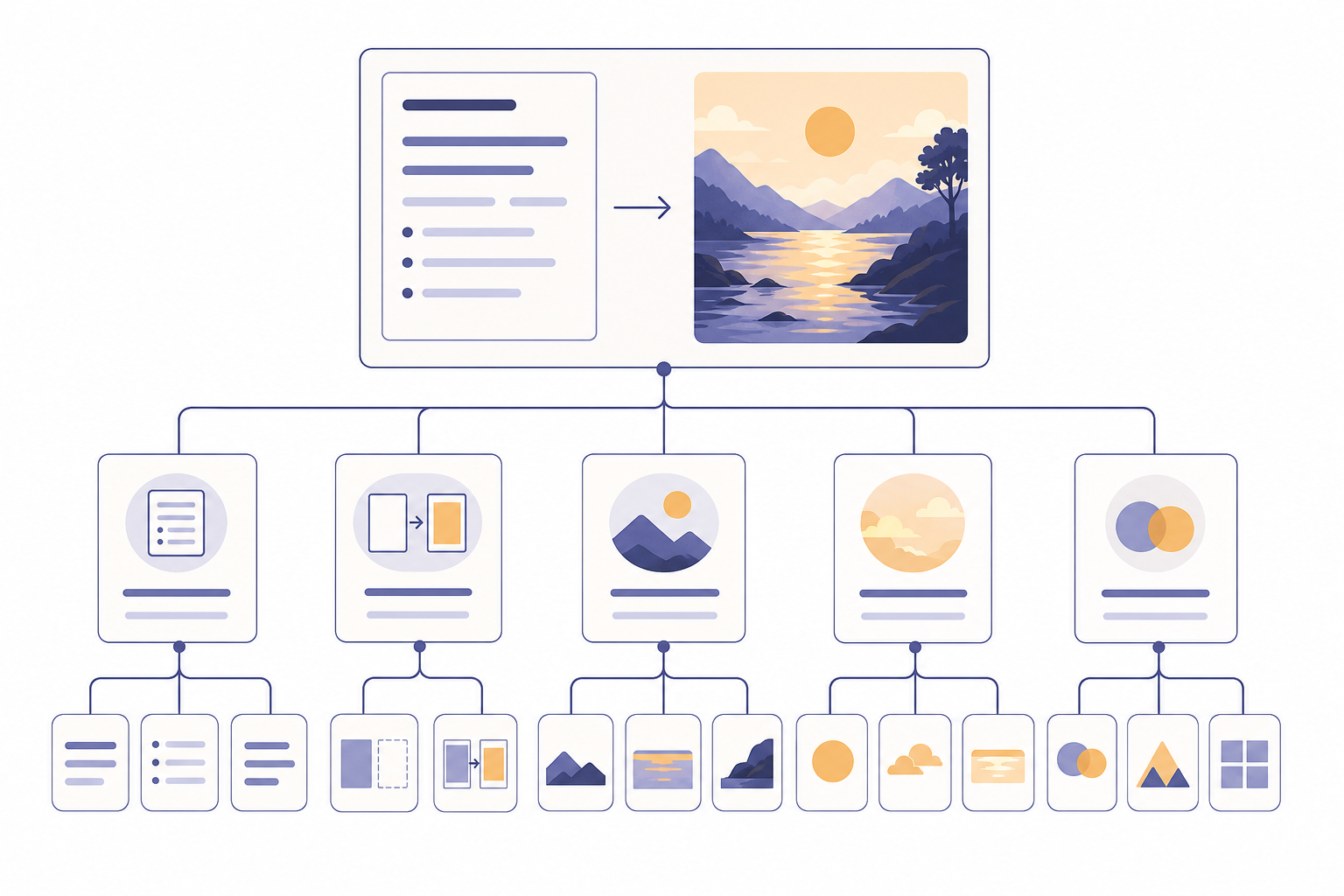
Traditional animation and effects build assets by construction: model, texture, and rig. An AI drama pipeline builds them by description: list what the story needs, generate it in volume, and test the look through fast concept sketches. The replacement for modeling is asset planning plus structured describing, and both are learnable in weeks rather than years.
The asset stage starts with a breakdown, not a toolbox. The breakdown runs on description: characters become expressions and outfits, locations become day, night, and lighting variants, and props become a written list. Generation then produces those assets in batches, and multi-angle concept sketches let a team test looks before committing. Consistency is the discipline this stage demands.
The smallest action chain you can run this week: write one scene as a plain prose description; recast it as a structured prompt covering subject, lighting, mood, and motion; generate; then check the output for motion range and physical coherence before iterating. The recurring trap has a name and a face: physical deformation and flicker. Catching them is a checking habit, not a talent.
The strongest evidence that the bar is method rather than modeling is the team itself. The people who run the pipeline moved over from physical filmmaking: directors, cinematographers, gaffers, and post specialists, none of them with an AI modeling background, and they retooled onto an industrial AI pipeline. If people whose craft was built on physical production made that jump, the missing ingredient for a beginner is method, not software mastery.
The skills that actually matter
Once the technical barrier flattens, the separating skill is taste. The official position is specific: AI can generate images, but it cannot decide a shot's breathing room, the lighting that matches a story mood, or the logic of a rigorous montage. Audiovisual grammar and aesthetic cultivation are the dividing line, in DRAMAGO's own wording.
The same user research carries a question worth quoting. Asked what the real competitive barrier is once AI lowers the threshold, the official answer on record: the capacity to keep creating quality content, and a team that combines technology, creation, and user needs. Read as career advice for one person, it ranks skills clearly:
- Story structure and branch design, because a branch tree that collapses ruins everything built on it.
- Character building, because audiences return for people, not renders.
- Basic shot language, because framing, cutting rhythm, and pacing are what make generated material feel directed.
- Tool operation, last on purpose: it is the most learnable layer and the least decisive.
Tools change. The first three compound.
Your three realistic paths
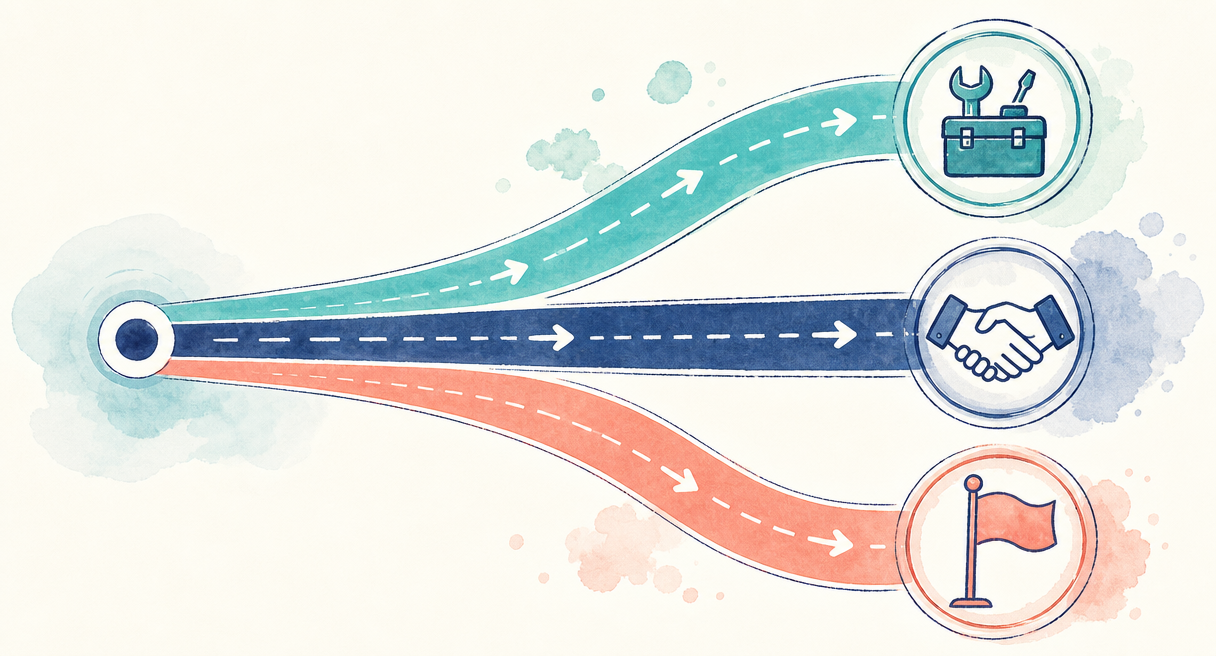
Three routes exist, and each compresses into a what and a how. Learn a consumer toolchain to build small, bring finished work to a platform to build at scale, or participate first and absorb the grammar of interactive narrative before writing your own. All three are honest; only the second involves DRAMAGO directly.
Route one: assemble a personal toolchain. What: combine consumer-grade text, image, video, and editing tools into a workflow sized for one person. How: start with a single scene, not a series; graduate to a single-episode short; keep every prompt that worked and delete the rest. The specific tools matter far less than the loop of describing, generating, and checking.
Route two: partner with a platform. What: bring story capability to a production system that already runs at scale. How: DRAMAGO's stated collaboration circle includes individual screenwriters worldwide, professional film and television creation teams, AIGC industry associations, and media organizations, and its studio-grade AI agent workflow has offered partial licensing to professional film teams since July 2026. A finished short and a one-page treatment open more doors than any software skill.
Route three: participate first, create later. What: build a reader's instinct for interactive narrative before writing your own. How: play finished interactive titles in the app, make choices at the nodes, try the AI face swap, and notice where decisions land and why. Episodes last one to three minutes, typically two to three, and every series opens with free episodes, so the apprenticeship costs nothing; the drama library held thirteen AI live-action dramas, nine interactive titles among them, as of early September 2026.
One boundary stays fixed across all three routes. The DRAMAGO app is currently a platform for watching and interacting, not a tool for user-made dramas; there is no official word on any one-click AI drama generation feature for users, and the app's actual feature set is the reference. The platform's planned Story World follows the same rule in its first phase: user-created stories, worlds, and characters are not part of phase one.
Frequently asked questions
Do I need to code or model to make an AI drama?
No to both. Generation replaced modeling as the asset route, and no stage of the pipelines described here requires programming. The checking habits from section two are the closest thing to a technical skill, and they are habits, not credentials.
Can I make a drama inside the DRAMAGO app?
Not currently. The app's participation layer runs from story choices and character interaction to AI face swap, with timed events and panoramic exploration on selected titles. Next comes the first AI-powered Story World, launching soon. Drama creation happens in professional and personal pipelines outside it. What the app will support later is a matter for official announcements, not speculation.
What should I learn first?
Story structure and branch design. It is the skill AI cannot supply, the one every route above rewards, and the cheapest to practice: a branch tree fits on paper, and paper is free.
For watching rather than making, the viewer's path guide runs from first episode to character chat. For the complete professional method, read the full professional framework walkthrough next. When you want the whole landscape, from writing your first branch to entering a finished world, the interactive story creation and participation guide is the map.